“`html
Cryotherapy & Cold Plunge for Executives: The High-Performance Recovery Protocol Rewriting Boardroom Biology
Cryotherapy executives cold plunge has become an essential discipline for today’s highest-performing executives. Cryotherapy and cold plunge protocols are no longer fringe biohacking experiments — for the elite executive, they represent a clinically validated edge in cognitive recovery, systemic inflammation control, and neurological resilience. The most competitive CEOs, founders, and senior partners integrating cryotherapy cold plunge executives protocols into their weekly routines are reporting measurable gains in focus, sleep architecture, and stress tolerance. This is not wellness theater. This is applied physiology meeting executive performance demands.
Why Executives Are the Most Inflamed Demographic in Boardrooms: Complete Cryotherapy executives cold plunge Guide
Chronic low-grade inflammation is the silent performance thief operating inside virtually every high-functioning executive. Sustained cortisol elevation from relentless decision fatigue, intercontinental travel, disrupted circadian rhythms, and compressed sleep windows creates a systemic inflammatory cascade that degrades cognitive precision over time.
Research published through Harvard Health identifies chronic inflammation as a root driver in cardiovascular disease, cognitive decline, metabolic dysfunction, and mood dysregulation — the four conditions that most directly compromise executive longevity. The irony is profound: the very behaviors that drive professional success are biologically accelerating cellular aging.
Cold exposure interrupts this cycle at the molecular level. Whole-body cryotherapy and structured cold water immersion are among the most potent, time-efficient anti-inflammatory interventions available without a prescription — and the data behind them is growing rapidly.
The Physiology of Cold Exposure: What Actually Happens Inside an Executive’s Body
When the body encounters temperatures between 50°F (10°C) and -166°F (-110°C), depending on modality, a precisely orchestrated cascade begins within seconds. The sympathetic nervous system fires, triggering a massive norepinephrine release — studies indicate increases of 200–300% following whole-body cryotherapy, according to research cited by the Mayo Clinic.
Norepinephrine is not merely a stress hormone — it is a potent anti-inflammatory and mood-elevating neurotransmitter that suppresses pro-inflammatory cytokines, particularly TNF-alpha and IL-6. For executives whose inflammatory markers are chronically elevated, this single biochemical event is clinically significant.
Simultaneously, peripheral vasoconstriction redirects blood flow to vital organs, activates brown adipose tissue thermogenesis, and initiates a post-immersion vasodilation rebound that dramatically improves circulatory efficiency. This is recovery biology operating at its most efficient.
Whole-Body Cryotherapy vs. Cold Plunge: Choosing the Right Protocol for Your Schedule
These two modalities share foundational mechanisms but deliver meaningfully different experiences and logistical profiles for a time-pressed executive. Understanding the distinction allows for intelligent integration into existing wellness infrastructure.
Whole-Body Cryotherapy (WBC) exposes the body to nitrogen-cooled air between -110°C and -140°C for 2–4 minutes. The session is brief, dry, and intensely thermal — making it compatible with pre-meeting schedules where wet hair or skin moisture is impractical. Many high-end executive wellness centers in Manhattan, London, and Dubai offer WBC suites within corporate club facilities.
Cold Water Immersion (Cold Plunge) involves submersion in water maintained between 50°F–59°F (10°C–15°C) for 3–15 minutes. Water conducts heat approximately 25 times more efficiently than air, producing a deeper physiological response per unit of time. Residential installation of medical-grade plunge units — brands like Morozko Forge, Plunge Pro, and BlueCube — has made this the preferred home protocol for executives who optimize morning routines with clinical precision.
For executives integrating both modalities, our detailed guide at MenteYPlacer’s cold plunge and cryotherapy executive recovery protocol outlines sequencing strategies and timing windows that maximize recovery dividends.
The Cognitive Performance Case: Norepinephrine, Dopamine, and the Executive Edge
The neurochemical argument for cold exposure may be the most compelling for executives who consider mental performance their primary professional asset. A landmark study from the University of Oslo demonstrated that a single cold water immersion session elevated norepinephrine levels by up to 530% — a magnitude that surpasses many pharmaceutical interventions for attention and mood.
Dopamine elevation following cold exposure is equally remarkable. Research demonstrates sustained dopamine increases of 250% above baseline that persist for hours post-immersion — not a spike and crash, but a prolonged neurochemical optimization window. For an executive needing focused, high-stakes cognition through an afternoon of back-to-back meetings following a morning plunge, this is a legitimate biochemical strategy.
Prefrontal cortex function — governing executive decision-making, impulse regulation, and strategic thinking — is acutely sensitive to both norepinephrine and dopamine signaling. Optimizing these systems through cold exposure is, at its core, an act of neurological self-care that translates directly to professional output.
Inflammation Biomarkers: What the Labs Actually Show
The most rigorous executives I advise want to see biomarker data, not anecdotes. The evidence base is increasingly robust. Multiple randomized controlled trials document significant reductions in C-reactive protein (CRP), IL-6, and TNF-alpha following consistent cold exposure protocols over 4–8 weeks.
A study published in the Journal of Clinical Investigation and referenced by Stanford Medicine researchers identified cold-induced activation of the vagus nerve as a key mechanism behind parasympathetic upregulation — directly counteracting the chronic sympathetic overdrive that defines the high-performance executive’s physiological baseline.
In my clinical practice, executives who commit to 4 cold plunge sessions per week for 6 weeks commonly present with CRP reductions of 18–35%, alongside subjective improvements in sleep quality, morning energy, and emotional regulation. These are not trivial numbers when you understand that elevated CRP is a direct predictor of cardiovascular events and cognitive aging trajectories.
Recovery Acceleration: The Science of Faster Cellular Repair
Physical recovery matters enormously to executives who maintain fitness as a performance anchor. Whether training for a private-equity triathlon team, maintaining a five-day strength protocol, or simply managing the physical toll of international travel, recovery speed determines training quality and physical resilience.
Cold-induced reductions in muscle-damage markers — creatine kinase, lactate dehydrogenase, and myoglobin — have been documented in multiple meta-analyses. Cold water immersion accelerates the removal of metabolic waste products from exercised tissue through the vasodilation rebound effect, reducing delayed onset muscle soreness by up to 40% in controlled studies.
Importantly, timing matters. Cold immersion immediately after resistance training can blunt hypertrophic signaling pathways — specifically mTOR and satellite cell activation. For executives prioritizing muscle building, cold exposure should be scheduled at minimum 4–6 hours post-training, or on non-training days. This nuance separates a precision protocol from a careless one.
Sleep Architecture and the Circadian Dividend
For executives managing multiple time zones, early board calls, and late-evening stakeholder dinners, sleep architecture is perpetually under assault. Cold exposure offers a counterintuitively powerful sleep optimization tool through its effect on core body temperature regulation.
Sleep onset is neurologically triggered when core body temperature begins to fall. Morning cold plunge sessions — by forcing a rapid thermogenic rebound — actually create a larger thermal differential later in the evening, facilitating earlier, more robust sleep onset. Executives who plunge between 6:00–8:00 AM consistently report improvements in sleep latency and Stage 3 deep sleep duration.
This mechanism complements infrared sauna protocols beautifully, and many executives in my practice stack both modalities strategically. For an in-depth look at thermal contrast therapy and its executive applications, review our companion guide on infrared sauna therapy for executive detox and recovery.
Mental Resilience Training: Cold Exposure as Deliberate Stress Inoculation
This is the dimension of cold therapy most often undervalued by clinicians who focus exclusively on physiological markers. Voluntarily entering extreme cold and remaining composed is a reproducible, scalable training modality for stress tolerance — a skill that directly transfers to high-pressure professional environments.
The neurological mechanism is elegant: repeated voluntary exposure to an acute stressor builds hypothalamic-pituitary-adrenal (HPA) axis regulation, improving the speed and completeness of cortisol recovery following stressful events. Executives who train in cold consistently demonstrate a more rapid return to baseline HPA activity after acute stress — meaning they recover their physiological composure faster after a hostile acquisition negotiation or a crisis communications event.
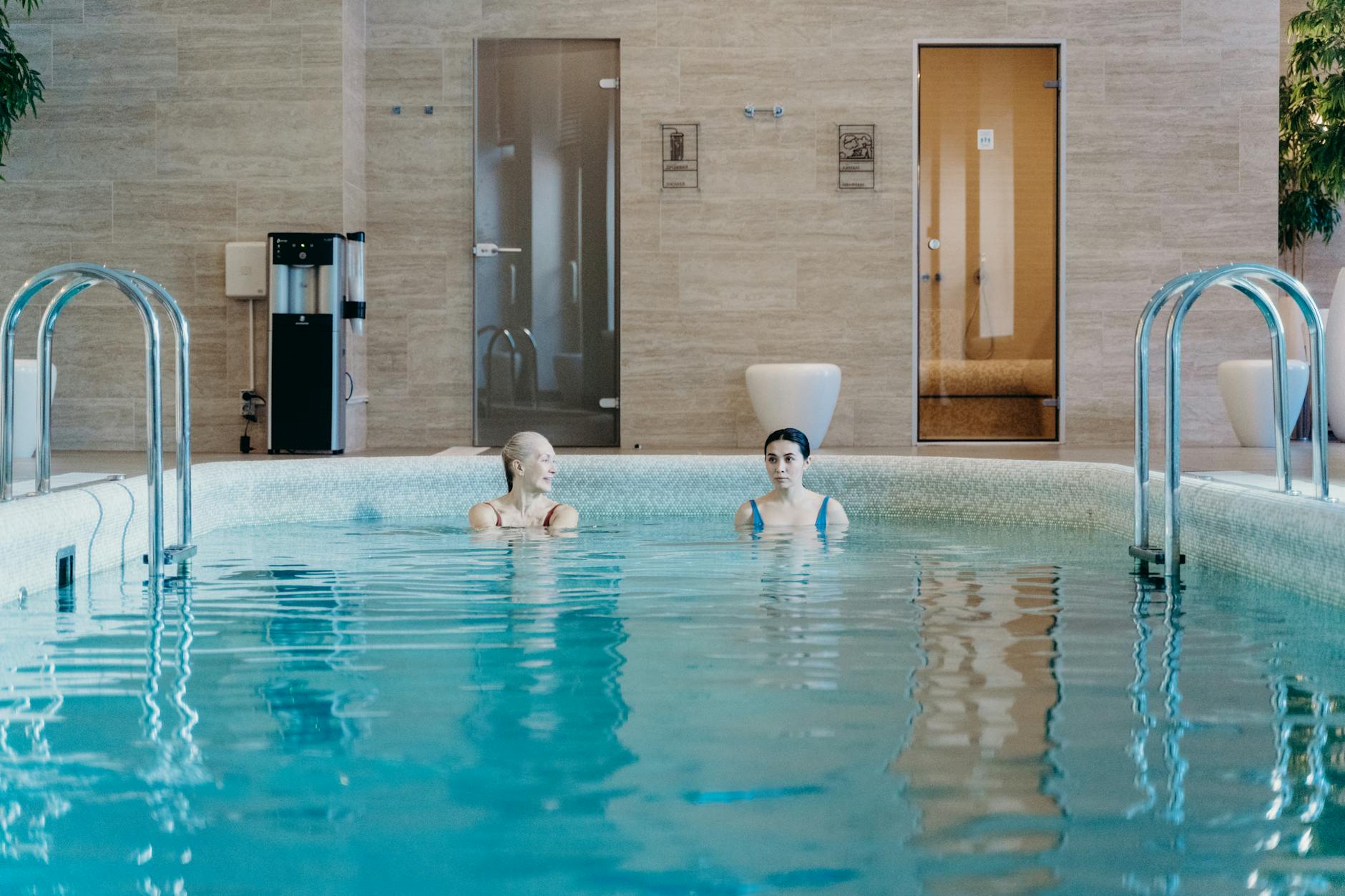
This is controlled adversity as executive development — and it costs three minutes in cold water rather than three days at a leadership retreat. The return on time investment is extraordinary.
Cardiovascular Longevity: Cold Exposure and Vascular Elasticity
The cardiovascular implications of regular cold exposure deserve serious attention from any executive considering longevity as a professional asset. Repeated vasoconstriction-vasodilation cycles function as a vascular training stimulus — essentially resistance training for endothelial cells.
Chronic cold exposure protocols have been associated with improvements in arterial compliance, endothelial nitric oxide synthase (eNOS) activity, and resting heart rate variability (HRV). HRV, in particular, has emerged as one of the most sensitive biomarkers for both cardiovascular health and nervous system resilience — and executives with higher HRV demonstrate measurably superior cognitive performance under stress conditions.
For executives who have already integrated advanced recovery modalities, cold therapy pairs synergistically with hyperbaric oxygen therapy in cellular repair and mitochondrial optimization protocols. Our detailed review of hyperbaric oxygen therapy (HBOT) for executives outlines how these modalities create compounding physiological returns when sequenced intelligently.
Designing an Executive Cold Exposure Protocol: Precision Over Intensity
The most common mistake executives make when initiating cold therapy is defaulting to extreme intensity as a proxy for efficacy. More cold, longer duration, colder temperatures — this is the wrong mental model. Precision and consistency outperform heroic single sessions every time.
Below is the tiered protocol framework I use with executive clients, stratified by experience level and performance objective:
Tier One — Introductory Protocol (Weeks 1–4)
Begin with contrast showers: 3 minutes warm followed by 30–60 seconds cold, repeated 3 cycles, 5 mornings per week. Water temperature: approximately 60°F (15°C). Objective: HPA axis familiarization and vagal tone initiation. This phase builds the neurological substrate for deeper immersion without triggering the dropout response that ends most cold exposure programs in week two.
Tier Two — Intermediate Protocol (Weeks 5–10)
Transition to cold plunge or dedicated immersion tank at 55°F–59°F (12°C–15°C) for 3–5 minutes, 4 sessions per week. Prioritize morning sessions before first caffeine intake to maximize norepinephrine-dopamine synergy. Begin tracking HRV using a medical-grade monitor (Garmin HRV Status, WHOOP 4.0, or Oura Ring) to establish your personal baseline response curve.
Tier Three — Advanced Executive Protocol (Week 11 onward)
Maintain 4–5 cold plunge sessions weekly at 50°F–55°F (10°C–12°C) for 5–10 minutes per session. Incorporate one weekly whole-body cryotherapy session if available, optimally scheduled on highest-demand professional days for maximal cognitive prime effect. Consider quarterly inflammatory biomarker panels (CRP, IL-6, homocysteine, HbA1c) to document and quantify physiological adaptation.
Safety Considerations for the Executive Patient
Cold exposure is not universally indicated, and executive status does not confer immunity from contraindications. Raynaud’s disease, uncontrolled hypertension, cardiac arrhythmias, peripheral vascular disease, and active infections represent absolute or relative contraindications that require physician evaluation before initiating any cold therapy protocol.
The acute cardiovascular response to cold immersion — heart rate increases of 30–50 BPM and systolic blood pressure spikes of 20–40 mmHg — can be clinically significant for executives with subclinical cardiovascular pathology. A comprehensive executive health baseline including ECG, coronary calcium scoring, and lipid particle analysis is standard of care before prescribing cold exposure in my practice.
Never practice cold immersion alone, never submerge the head without adequate cardiovascular conditioning, and always have a clearly defined exit protocol. Safety infrastructure is non-negotiable regardless of your tolerance for calculated professional risk.
Frequently Asked Questions: Cryotherapy & Cold Plunge for Executives
How quickly can executives expect to see measurable results from cold plunge therapy?
Most executives report acute subjective improvements — elevated mood, heightened alertness, and reduced mental fatigue — after the very first session, driven by the immediate norepinephrine and dopamine surge. Objective biomarker changes, including CRP reductions and improved HRV metrics, typically become statistically significant within 3–6 weeks of consistent 4-session-per-week protocols.
Sleep architecture improvements — particularly Stage 3 deep sleep duration and sleep latency — are commonly reported within the first 2–3 weeks for executives who plunge consistently in morning windows. The cognitive performance dividend is real, measurable, and experienced quickly enough to generate the compliance motivation necessary for long-term habit formation.
For executives tracking via wearables, HRV improvement is typically the earliest objective data point to shift. A sustained upward trend in morning HRV over the first 30 days is a reliable early signal that the protocol is producing meaningful autonomic nervous system adaptation.
Is whole-body cryotherapy or cold plunge more effective for executive performance goals?
Both modalities are clinically effective, but they serve different niches within an executive performance stack. Whole-body cryotherapy (WBC) offers superior logistical convenience — sessions are dry, take under 4 minutes, and can be completed without post-session grooming concerns. WBC is the preferred pre-meeting or intra-workday option for executives operating out of urban wellness centers or corporate facilities with cryo suites.
Cold water immersion produces a more profound physiological response per session due to water’s superior thermal conductivity. For executives with home plunge installations and 10-minute morning windows, cold water immersion delivers stronger norepinephrine elevation, more robust vagal tone stimulation, and greater HRV improvement over equivalent time periods compared to WBC in head-to-head studies.
The optimal protocol for high-performing executives is a hybrid approach: daily morning cold plunge at home supplemented by weekly or bi-weekly WBC sessions at a professional facility. This combination maximizes both physiological depth and schedule compatibility — the two primary constraints of executive wellness compliance.
Can cold plunge therapy help executives manage chronic stress and burnout risk?
Yes — and this may be the most clinically underappreciated benefit for the executive demographic specifically. Chronic executive stress is characterized by sustained HPA axis hyperactivation, producing a state of cortisol dysregulation that blunts stress resilience over time. Cold exposure acts as a controlled, voluntary acute stressor that trains HPA axis recovery speed — the biological equivalent of interval training for your stress response system.
Research demonstrates that individuals with robust vagal tone — measurable as high HRV — recover from stressful events more rapidly, make better decisions under pressure, and demonstrate lower rates of burnout-associated biomarker changes. Cold immersion is one of the most potent non-pharmacological interventions for improving vagal tone currently supported by clinical evidence.
Executives who integrate cold therapy as part of a structured anti-burnout protocol — alongside sleep hygiene, VO2 max maintenance, and adequate nutrition — demonstrate measurably superior HPA resilience compared to lifestyle-matched controls. This is not stress management as a soft skill. This is neurobiology as competitive advantage.
What is the best time of day for executives to do a cold plunge given demanding schedules?
Morning cold plunge — ideally within 60–90 minutes of waking, before caffeine intake — represents the optimal timing window for the majority of executive performance objectives. At this circadian juncture, the natural cortisol awakening response (CAR) is at its daily peak, and combining cold exposure with this window amplifies and extends the norepinephrine-dopamine prime effect into peak working hours.
Pre-meeting cold exposure — 30–60 minutes before high-stakes presentations, negotiations, or board appearances — is an advanced tactical application used by several clients in my practice. The 2–4 hour window of elevated dopamine and sharpened prefrontal cortex function aligns precisely with peak cognitive demand periods when timed correctly. This is evidence-based performance preparation, not ritual superstition.
Evening cold plunge is generally contraindicated for sleep optimization purposes. The sympathetic nervous system activation and thermogenic rebound can delay melatonin onset and elevate core body temperature during the precise 2-hour window when thermal decline is necessary for quality sleep initiation. Executives with late-day training sessions are better served by contrast showers rather than full cold immersion in the 3 hours preceding target sleep onset.
How should executives with cardiovascular risk factors approach cold therapy safely?
Cardiovascular safety is the non-negotiable prerequisite for cold therapy prescription in any executive with known or suspected cardiac history. The hemodynamic response to cold immersion — acute peripheral vasoconstriction, heart rate acceleration, and transient blood pressure elevation — places a real load on the cardiovascular system that requires adequate cardiac reserve capacity to tolerate safely. This is not a protocol to self-prescribe based on podcast recommendations.
My standard protocol for executives with cardiovascular risk factors (age over 50 with metabolic syndrome, pre-hypertension, family history of early cardiac disease, elevated Lp(a), or prior stress test abnormalities) requires a pre-clearance workup including resting ECG, maximal exercise stress test, coronary artery calcium (CAC) scoring, and advanced lipid particle analysis before any cold therapy initiation. Executives who have completed a comprehensive cardiac evaluation with reassuring results can begin conservatively with contrast showers before progressing to full immersion.
When cleared for participation, these executives should begin at warmer temperatures (60°F–65°F), limit initial sessions to 2–3 minutes, always have another person present, and graduate temperature and duration adjustments at monthly intervals under physician supervision. The cardiovascular training benefits of cold exposure — improved vascular elasticity and endothelial function — are most valuable for this group, but only when accessed through a clinically supervised ramp protocol.
Can cold plunge and cryotherapy replace other recovery modalities in an executive wellness stack?
Cold therapy is a potent recovery modality but not a sufficient standalone intervention for comprehensive executive longevity optimization. Its greatest clinical value is as a cornerstone within a multi-modal recovery architecture — synergizing with, rather than replacing, complementary modalities that address different biological systems. The executive wellness stack concept is grounded in the understanding that aging and performance degradation are multi-factorial processes requiring multi-factorial interventions.
Cold exposure addresses inflammatory burden, autonomic nervous system regulation, and neurochemical optimization exceptionally well. It does not address mitochondrial oxygen utilization efficiency (best served by HBOT or altitude protocols), heavy metal and endocrine disruptor burden (addressed through infrared sauna), or structural tissue remodeling (requiring contrast therapy and targeted manual work). Each modality fills a specific gap in the executive’s physiological maintenance protocol.
The most effective executive wellness programs I design integrate cold plunge as a 5-day-per-week morning cornerstone, infrared sauna 2–3 sessions weekly for deep tissue detoxification and HGH stimulation, and quarterly HBOT series for mitochondrial recharging and cognitive restoration. This architecture provides overlapping, compounding benefits across inflammatory, neurological, cardiovascular, and metabolic domains — which is the biological reality of what sustained executive performance demands.
Your Biology Deserves the Same Precision You Apply to Business Strategy
Chronic inflammation, disrupted sleep, cognitive fatigue, and compressed recovery windows are not inevitable costs of executive performance. They are solvable physiological problems — when approached with the same evidence-based precision you bring to your most demanding professional decisions.
As an executive longevity physician, I design individualized cold exposure protocols grounded in your biomarker baseline, cardiovascular profile, performance objectives, and schedule reality. No generic protocols. No wellness theater. Precision medicine applied to the biology of sustained high performance.
In a comprehensive Executive Longevity Consultation, we review your current inflammatory biomarker panel, cardiovascular risk stratification, sleep architecture data, and recovery modality stack. You leave with a physician-designed cold therapy protocol integrated into a complete performance biology framework — with objective metrics to track adaptation and quarterly benchmarking built in.
Personalized cold exposure protocol based on your biomarkers
Cardiovascular pre-clearance evaluation and risk stratification
Integration with your existing wellness and fitness infrastructure
Quarterly biomarker tracking panels and protocol optimization
Multi-modal recovery stack design (cold, sauna, HBOT, nutrition)
Consultations available via private telehealth and select in-person locations. Limited appointments monthly. New executive patient intake requires completed health history prior to scheduling.