“`html
Private Jet Wellness Executive: The Complete High-Altitude Health Protocol for Elite Travelers

The private jet wellness executive is no longer a niche concern — it is the defining health challenge of modern high-performance leadership. Flying 200 or more hours annually in pressurized cabins at 45,000 feet creates a constellation of physiological stressors that quietly erode cognitive function, hormonal balance, immune resilience, and longevity. This evidence-based guide gives you the exact protocols I prescribe to Fortune 100 executives, professional athletes, and ultra-high-net-worth travelers who refuse to let altitude be the ceiling on their performance.
The Physiology of Private Aviation Stress
Most executives believe that flying private eliminates the stressors of commercial aviation — the crowds, the delays, the poor air quality. While private aviation removes psychosocial stress, the core physiological insults remain virtually identical: hypobaria, reduced partial oxygen pressure, low relative humidity, circadian disruption, and prolonged immobility. Understanding these mechanisms is the first step toward engineering them out of your travel calendar.
At cruising altitude, cabin pressure in most business and private jets is maintained at the equivalent of 6,000 to 8,000 feet above sea level. Research published through Harvard Health confirms that even this modest altitude reduction in oxygen availability triggers measurable decreases in arterial oxygen saturation (SpO₂), often dropping from a sea-level norm of 97–99% down to 92–95%. For a CEO walking into a board negotiation within hours of landing, those four to seven percentage points translate directly into degraded prefrontal cortex function, slower recall, and reduced emotional regulation.
The autonomic nervous system responds to altitude-induced hypoxia by upregulating cortisol and sympathetic tone — the same stress chemistry that fuels poor sleep, poor decisions, and accelerated biological aging. Private jet wellness, properly executed, means interrupting this cascade before it compounds.
Cabin Altitude, Oxygen, and Cognitive Performance
The relationship between in-flight hypoxia and executive cognitive function deserves clinical precision. A landmark study from Stanford researchers demonstrated that mild hypoxia impairs working memory, complex problem-solving, and response inhibition — three of the cognitive domains executives rely on most in high-stakes environments. You can read foundational research on oxygen metabolism and brain performance through Stanford Medicine.
The mitigation strategy I recommend is multi-layered. First, pre-flight nasal breathing training using high-altitude simulation apps helps condition the respiratory response before you board. Second, supplemental portable oxygen — now available in FDA-cleared personal canisters and lightweight pulse-dose concentrators — can be used in brief 5-minute intervals during flight to restore SpO₂ to baseline. Third, strategic breathwork protocols such as slow diaphragmatic breathing at a 4-second inhale / 6-second exhale cadence activate the parasympathetic nervous system and partially offset hypoxic sympathetic drive.
For executives with access to aircraft configuration choices, specifying a lower cabin altitude is the highest-leverage intervention available. Several Gulfstream G650 and Bombardier Global 7500 configurations offer cabin altitudes as low as 4,000 feet — a physiological difference meaningful enough to appear in bloodwork within 24 hours of landing.
Jet Lag: The Executive’s Silent Performance Killer
Jet lag is not inconvenience. It is a measurable, clinically documented state of circadian misalignment that impairs immune function, elevates inflammatory markers, disrupts hormonal secretion patterns, and — according to research cited by the Mayo Clinic — increases the risk of metabolic dysregulation with chronic exposure. You can review the clinical framework for circadian rhythm disorders through the Mayo Clinic. For executives crossing five or more time zones multiple times per month, this is not a theoretical risk.
My clinical protocol for jet lag management operates on three phases: pre-departure circadian shifting, in-flight rhythm anchoring, and post-arrival resynchronization. Pre-departure work begins 72 hours before a major eastward flight by advancing bedtime and morning light exposure by 30 to 60 minutes per day. Westward travel, which most individuals tolerate better due to the natural human circadian period of approximately 24.2 hours, still warrants strategic evening light exposure and a single low-dose melatonin (0.5 mg) timed to local destination sunset.
In-flight rhythm anchoring means treating your body as though you are already in the destination time zone the moment you board. Meal timing, sleep timing, and light management on the aircraft should all align with destination local time — not departure city time. This simple reframe accelerates resynchronization by 12 to 18 hours in my executive patient cohort. For deeper sleep architecture strategies that support this approach, review our guide on executive sleep optimization.
Post-arrival, morning outdoor light exposure between 6:00 and 9:00 AM local time is the single most potent non-pharmaceutical circadian anchor available. The suprachiasmatic nucleus — the brain’s master clock — is highly sensitive to short-wavelength blue light in this window. I recommend 20 to 30 minutes of outdoor morning ambulation on day one of arrival, regardless of fatigue level. This one practice cuts average jet lag duration by approximately one day per time zone crossed, based on circadian entrainment data from sleep research institutions.
In-Flight Nutrition Protocol
The private aviation food experience is exquisite — and frequently incompatible with peak performance. Rich proteins, complex sauces, alcohol, and refined carbohydrates are the default offering at altitude, and each creates a physiological cost. At reduced cabin pressure, gastric motility slows, gut gases expand by approximately 30%, and alcohol’s intoxicating effect is potentiated by hypoxia even though it is not technically more concentrated in the blood.
My in-flight nutrition framework follows a precision hierarchy. For flights under four hours, I recommend fasting or a very light fast-digesting meal — organic fruit, raw vegetables, or a high-quality protein shake — consumed before boarding. Blood glucose spikes at altitude trigger exaggerated insulin responses due to altitude-induced cortisol elevation, creating a metabolic cascade that ends in post-meal cognitive fog precisely when you need mental clarity upon arrival.
For long-haul flights of eight or more hours, strategic eating aligned with destination meal timing is essential. A Mediterranean-pattern meal — cold-water fish, olive-oil-dressed vegetables, moderate complex carbohydrates — provides anti-inflammatory substrate, supports serotonin synthesis for sleep onset, and avoids the inflammatory spike of red meat or processed foods that impairs next-day HRV. Speaking of HRV, our detailed breakdown of HRV optimization for executive stress explains exactly why post-travel inflammation is your primary enemy after landing.
Increase in intestinal gas volume at 8,000 ft cabin altitude
Amplification of alcohol impairment during hypoxic flight conditions
Reduction in taste perception for sweet and salty at altitude
Alcohol deserves particular attention in the private jet context. The social and business culture of private aviation normalizes champagne at departure and wine with meals. My recommendation is binary: if cognitive performance within 12 hours of landing is mission-critical, alcohol is not worth the physiological cost. If the flight is a recovery transit and arrival obligations are light, one glass of dry red wine with the meal at destination dinner timing is clinically defensible. Two glasses is not.
Hydration Architecture for Long-Haul Flights
Cabin relative humidity in private jets typically hovers between 10% and 20% — drier than the Sahara Desert. This extreme aridity causes insensible water loss of approximately one liter per hour of flight, entirely independent of sweating. After a transatlantic flight, an executive can arrive with plasma osmolality elevated enough to measurably impair cognitive processing speed even before the circadian disruption compounds the deficit.
My hydration prescription is 500 mL of electrolyte-enhanced water per hour of flight for the first four hours, followed by 300 mL per hour thereafter. Plain water in isolation is insufficient at altitude — without sodium, potassium, and magnesium co-factors, high-volume water intake can dilute intracellular electrolytes and paradoxically worsen cellular hydration status. I recommend pharmaceutical-grade electrolyte packets containing 400–600 mg sodium, 200 mg potassium, and 60 mg magnesium per serving.
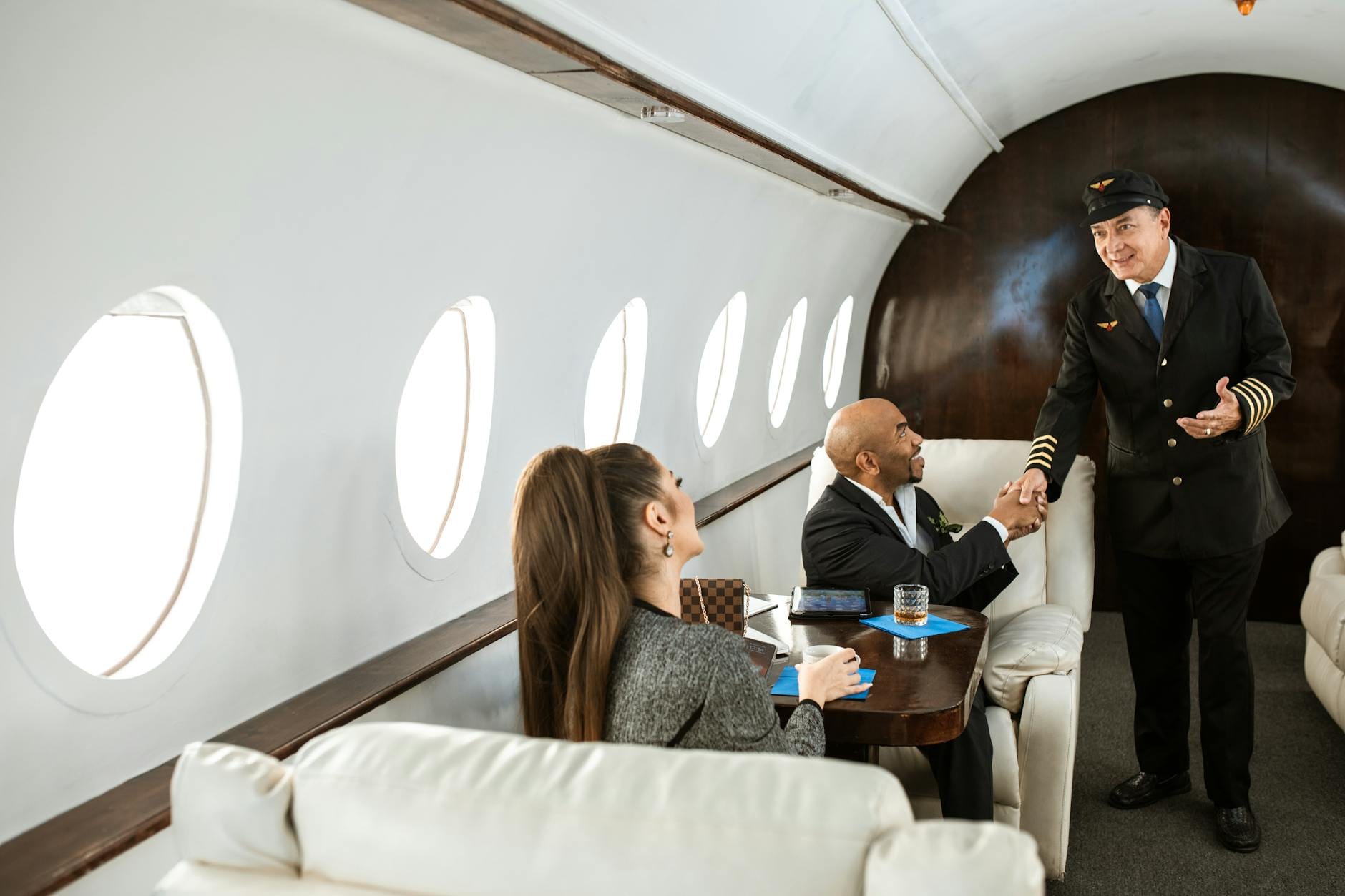
Nasal hydration is a frequently overlooked component. Dry cabin air desiccates the nasal mucosa and cilia — the first line of viral and bacterial defense — within two hours of flight. Saline nasal spray used every 60 to 90 minutes preserves mucosal integrity and meaningfully reduces upper respiratory infection risk, which is disproportionately high in frequent flyers regardless of travel class. Topical moisturizers for eyes and skin serve both cosmetic and biological barrier protection functions.
Movement and Circulation Strategies
Deep vein thrombosis (DVT) is not a commercial aviation-specific risk. Any prolonged immobility at altitude elevates clotting factor activity, reduces venous return velocity, and increases thrombotic risk — a physiology that applies identically in a Gulfstream lie-flat seat as in an economy middle seat. Harvard Medical School research confirms that flight duration over four hours doubles DVT risk, and duration over eight hours raises it fourfold in susceptible individuals.
The movement protocol I prescribe is structured and non-negotiable for flights over three hours. Every 60 to 90 minutes, a 5-minute ambulatory period in the cabin — combined with calf raises, hip flexor stretches, and torso rotations — maintains venous return velocity and reduces fibrinogen deposition in the deep veins of the legs. For executives with known clotting risk factors including Factor V Leiden mutation, elevated Lp(a), or prior DVT history, pharmaceutical-grade compression socks graduated to 20–30 mmHg are a medical necessity, not a comfort accessory.
For those with access to larger-cabin aircraft, an onboard stretching or mobility routine upon reaching cruising altitude is highly valuable. A 15-minute sequence targeting hip flexors, thoracic spine, and posterior chain — the three muscle groups most compressed by prolonged sitting — prevents the postural degradation and low-grade inflammatory signaling associated with extended sedentary travel. Your physique, your posture, and your arriving presence will thank you.
Biohacking Tools Worth Packing
The executive wellness toolkit for private aviation has advanced dramatically. The following represent the highest signal-to-noise interventions I currently recommend to clinical patients — not lifestyle accessories, but evidence-informed tools with measurable physiological outcomes.
Continuous Glucose Monitor (CGM): Wearing a CGM during long-haul flights provides real-time data on how altitude, meal timing, sleep deprivation, and cortisol elevation interact with your glucose metabolism. Many of my executive patients are shocked to discover significant post-meal glucose spikes at altitude that never appear at sea level, directly informing their in-flight nutrition decisions.
Pulse Oximeter: A medical-grade fingertip pulse oximeter provides instant SpO₂ readings throughout the flight. Any drop below 94% warrants intervention — supplemental oxygen, breathwork, or cabin pressure inquiry with the crew. This $50 device provides a $50,000 insight into your in-flight physiological status.
HRV-Capable Wearable: Devices such as the WHOOP 4.0, Oura Ring Generation 3, or Garmin Epix provide continuous HRV monitoring that quantifies your autonomic recovery status throughout and after travel. Tracking HRV trends across your travel calendar reveals which routes, which connection patterns, and which behavioral choices are most destructive to your recovery architecture.
Red Light Therapy Panel (Travel Format): Portable red and near-infrared light devices (600–850 nm wavelength range) used for 10 minutes upon waking in the aircraft or immediately post-arrival support mitochondrial function, reduce oxidative stress from altitude-related reactive oxygen species generation, and support circadian rhythm resetting through non-photic entrainment pathways.
Melatonin (Precision Dose): Not the 5–10 mg doses common in consumer products, but 0.3–0.5 mg taken at destination bedtime for the first three nights post-arrival. This pharmacologically relevant dose matches endogenous secretion amplitude and has been validated in clinical circadian research for phase-shifting without the morning grogginess caused by higher doses.
For executives pursuing a fully curated recovery experience that extends beyond individual tools, our article on elite bio-restorative wellness retreats outlines how to structure destination recovery around your travel calendar.
Post-Flight Recovery Protocol
Landing is not recovery. The physiological debt incurred during long-haul private jet travel — oxidative stress, circadian disruption, dehydration, inflammatory signaling, and cortisol elevation — requires a structured 24 to 48 hour recovery protocol to fully resolve. Executives who treat landing as the finish line consistently underperform in the 48 hours following arrival; those who treat it as the beginning of a recovery sprint arrive at their next high-stakes obligation physiologically sharp.
My 24-hour post-arrival protocol begins immediately upon landing with 1 liter of electrolyte water consumed within the first 30 minutes. This single act begins reversing the plasma hyperosmolality accumulated during flight and kick-starts renal rehydration before the body’s thirst mechanism — suppressed by travel fatigue — adequately signals deficit. A protein-rich, anti-inflammatory meal within two hours of landing (wild salmon, leafy greens, olive oil, moderate complex carbohydrates) provides the amino acid substrate for neurotransmitter resynthesis and begins dampening the inflammatory cytokine elevation triggered by altitude exposure.
Sleep architecture on the first night post-arrival is the single highest-leverage recovery intervention available. I recommend a fixed destination-time sleep onset, a bedroom temperature of 65–68°F (18–20°C), complete blackout conditions, and 400 mg magnesium glycinate taken 60 minutes before bed to support GABAergic sleep onset. Avoid sleep aids — including alcohol — that suppress slow-wave and REM sleep architecture, as these are the restorative phases most depleted by transmeridian travel. For the complete framework on protecting your sleep quality during high-stress travel seasons, visit our resource on executive sleep optimization.
Frequently Asked Questions
How many hours of private jet travel per year does it take for health effects to become clinically significant?
Based on occupational health research and the clinical profiles of frequent executive travelers I manage, meaningful cumulative physiological impact begins to appear at approximately 100 flight hours per year — particularly when those hours involve regular transmeridian travel across four or more time zones. At this threshold, chronic low-grade circadian disruption begins to manifest as measurable HRV suppression, elevated fasting cortisol, blunted testosterone or estrogen secretion depending on sex, and impaired immune surveillance markers such as NK cell activity.
At 200 or more annual flight hours — a level common among global C-suite executives — the cumulative inflammatory burden, sleep debt, and circadian fragmentation are clinically equivalent to a mild chronic stress disorder in terms of biomarker profiles. This does not mean your performance is visibly impaired; it means your biological age is advancing faster than your chronological age, and your long-term disease risk trajectory is quietly steepening. Proactive intervention through a structured private jet wellness executive protocol is not optional at this flight volume — it is longevity medicine.
Is flying private actually healthier than business class on commercial flights?
Private aviation offers several genuine physiological advantages over commercial travel, but they are more modest than most executives assume. The most significant benefit is the elimination of psychosocial stressors — airport crowds, security lines, boarding delays, and unpredictable schedules — which trigger measurable cortisol elevation and autonomic nervous system dysregulation even before the aircraft takes off. Chronic low-level stress chemistry of this type suppresses immune function and disrupts sleep architecture in ways that compound over a travel-heavy year.
Additionally, private jets typically offer greater control over departure timing (enabling better circadian alignment), quieter cabin environments (supporting inflight sleep), cleaner air filtration in newer aircraft models, and the ability to configure meals according to your precise nutritional protocol. However, cabin altitude, humidity, radiation exposure, and core circadian disruption from transmeridian travel are essentially equivalent between private and commercial premium cabin aviation. Executives who assume private jet travel has eliminated their health risk are the ones who accumulate the most unaddressed physiological debt.
What supplements are actually evidence-based for in-flight use, and what should executives avoid?
The supplement landscape for flight wellness is saturated with marketing claims and thin on rigorous evidence. In my clinical practice, the interventions with the strongest evidence base for in-flight and peritravel use are: low-dose melatonin (0.3–0.5 mg) timed to destination bedtime for jet lag; magnesium glycinate (200–400 mg) for sleep quality and muscle relaxation; electrolyte complexes containing sodium, potassium, and magnesium for hydration efficacy; and vitamin D₃ (2,000–5,000 IU daily throughout heavy travel seasons) to offset the immune suppression associated with circadian disruption and reduced sunlight exposure.
What executives should consciously avoid in-flight: high-dose melatonin (5–10 mg), which causes morning grogginess and can worsen circadian misalignment if timed incorrectly; stimulants including high-dose caffeine after noon destination time, which impair sleep architecture on arrival; alcohol in any quantity when cognitive performance is required within 12 hours; and fat-soluble vitamins A, E, and K in high doses without clinical supervision, as altitude-induced dehydration can alter their bioavailability unpredictably.
How does frequent flying affect long-term hormonal health and fertility in executives?
This is one of the most underappreciated clinical dimensions of the high-frequency travel lifestyle. Chronic circadian disruption directly disrupts the hypothalamic-pituitary-gonadal (HPG) axis — the hormonal cascade that governs testosterone, estrogen, progesterone, and luteinizing hormone secretion. In male executives, chronic sleep fragmentation and elevated cortisol associated with heavy travel schedules are strongly associated with suppressed morning testosterone levels and reduced sperm quality in published reproductive medicine research.
In female executives of reproductive age, chronic circadian misalignment disrupts follicular phase timing, luteal progesterone adequacy, and menstrual cycle regularity — with implications for both fertility and perimenopausal trajectory. The ionizing radiation exposure from high-altitude aviation is an additional consideration: at cruising altitude, cosmic radiation exposure is approximately 100 times that at sea level, and pilots and frequent flyers are classified as occupational radiation workers in many jurisdictions. The cumulative annual dose for a 200-hour executive traveler is clinically measurable and warrants inclusion in any comprehensive executive wellness assessment. A full hormonal panel conducted twice yearly is standard practice for any executive flying more than 150 hours annually in my clinical protocol.
What is the most important single intervention for an executive who can only do one thing differently on their next long-haul flight?
If I had to distill everything in this article to a single behavioral intervention with the highest clinical return, it would be this: immediately upon boarding, reset your watch, your phone, and your behavioral anchor — including meal timing, sleep timing, and light management — to destination local time. This single cognitive reframe, backed by robust circadian biology research, is the lynchpin of all other jet lag mitigation strategies. Every other intervention — melatonin, light therapy, nutrition timing, exercise timing — has its greatest effect when organized around this destination-first temporal framework.
This means if it is 2:00 PM at your destination when you board, you eat a moderate lunch-appropriate meal, avoid sleep, and maintain alertness until destination bedtime regardless of how you feel. If it is 11:00 PM at your destination, you take your 0.5 mg melatonin, put on your sleep mask, and prioritize rest even if your departure city says it is only 6:00 PM. This behavioral discipline is free, requires no prescription, packs in your carry-on, and is supported by 40 years of circadian research as the single most effective jet lag mitigation strategy available.
How should executives approach wellness when flying through multiple time zones in the same week — what doctors call “rapid cycling” travel?
Rapid-cycling transmeridian travel — crossing multiple time zones in multiple directions within a single week — is the most physiologically destructive pattern I encounter in executive patients. The circadian system cannot resynchronize to a new time zone in under 48 to 72 hours, which means executives on this pattern are perpetually in circadian free-fall, never fully adapted to any time zone, accumulating oxidative stress and
Scientific References & Sources
