Peptide therapy longevity has become an essential discipline for today’s highest-performing executives. Reviewed by Catalina Vega, Longevity & Performance Medicine | MenteYPlacer.com | April 2026
Peptide Therapy for Executive Longevity: The Complete 2026 Protocol
The most consequential decisions of your career happen inside a biological machine that is quietly deteriorating. Peptide therapy longevity protocols are changing that equation — offering C-suite executives a clinically grounded, precision-targeted approach to slowing cellular aging, accelerating recovery, and sustaining cognitive dominance well into their 60s and 70s. If you are still relying on sleep optimization and a multivitamin to protect a $10M productivity profile, you are leaving significant biological capital on the table.
Peptides are short-chain amino acid sequences — the molecular instructions your body uses to regulate growth, repair, inflammation, and hormonal signaling. As executive demand peaks and biological age accelerates, strategic peptide protocols close the gap between how hard you work and how well your body recovers.
In this guide, I outline the complete 2026 clinical protocol: the peptides with the strongest evidence base, precise dosing frameworks, ideal candidate profiles, and sourcing standards that meet the expectations of a discerning executive. This is not wellness marketing — it is applied longevity medicine.
The Science Behind Peptide Therapy and Longevity
Peptides are biologically active compounds composed of two to fifty amino acids linked by peptide bonds. Unlike pharmaceutical drugs, which typically force a single receptor interaction, therapeutic peptides mimic or amplify endogenous signaling cascades — working with your physiology rather than overriding it. This selectivity is precisely what makes them compelling for longevity applications.
Growth Hormone Secretagogues: The Executive Repair System
The hypothalamic-pituitary axis governs the release of growth hormone (GH), which declines approximately 15% per decade after age 30. Reduced GH output correlates with increased visceral adiposity, impaired muscle protein synthesis, diminished sleep architecture, and accelerated cognitive decline — all catastrophic for executive performance. Growth hormone secretagogues (GHS) like CJC-1295 and Ipamorelin stimulate the pituitary to produce GH in a physiologically pulsatile pattern, avoiding the risks associated with exogenous recombinant HGH.
CJC-1295 is a modified analogue of growth hormone-releasing hormone (GHRH) with a drug affinity complex that extends its half-life from minutes to days. When combined with Ipamorelin — a selective ghrelin receptor agonist — the result is a synergistic GH pulse that closely mirrors youthful secretion patterns. This combination does not suppress the hypothalamic-pituitary feedback loop, making it substantially safer than exogenous HGH administration.
At the cellular level, elevated GH and its downstream mediator insulin-like growth factor 1 (IGF-1) activate mTORC1 and PI3K-Akt pathways, driving protein synthesis, mitochondrial biogenesis, and tissue repair. Critically for executives, GH also modulates the sleep cycle by deepening slow-wave sleep — the stage during which memory consolidation and metabolic restoration occur.
Tissue-Repair Peptides: BPC-157 and TB-500
BPC-157 (Body Protection Compound-157) is a pentadecapeptide derived from a naturally occurring protein in human gastric juice. Its mechanism involves upregulation of the nitric oxide (NO) pathway, stimulation of growth factor receptors including VEGFR2, and modulation of dopaminergic and serotonergic neurotransmission. In animal models, BPC-157 has demonstrated accelerated healing of tendons, ligaments, muscle, bone, and intestinal epithelium at doses translatable to humans.
TB-500 (Thymosin Beta-4) is a synthetic analogue of a naturally occurring protein ubiquitously expressed in human cells. It promotes actin polymerization, cell migration, and angiogenesis — the fundamental processes required for tissue regeneration. TB-500’s anti-inflammatory properties are particularly relevant for executives carrying chronic musculoskeletal load from sedentary travel and high-stress postures.
Together, BPC-157 and TB-500 constitute what longevity clinicians increasingly call the executive repair stack. When systemic inflammation is suppressed and tissue repair pathways are activated simultaneously, the compounding effect on biological age reduction is measurable via advanced biomarkers including high-sensitivity CRP, IL-6, and methylation-based biological age clocks.
Epigenetic and Mitochondrial Mechanisms
Emerging research positions peptides within the broader framework of epigenetic reprogramming. Certain peptides influence DNA methylation patterns — the same markers tracked by Horvath’s epigenetic clock — suggesting that peptide protocols may directly retard biological aging at the chromatin level. This intersects meaningfully with complementary interventions like NAD+ infusion therapy, which restores the coenzyme central to mitochondrial energy metabolism and sirtuin-mediated DNA repair.
The mitochondrial angle is not incidental. Peptides like MOTS-c and SS-31 — less mainstream but increasingly used in elite longevity practices — directly target mitochondrial membrane potential and reactive oxygen species (ROS) scavenging. For an executive whose cognitive output is directly tied to neuronal energy availability, mitochondrial peptide support is not optional — it is foundational.
Clinical Evidence for Peptide Therapy Longevity Outcomes
The evidence base for therapeutic peptides has matured considerably. While large-scale Phase III trials remain limited — in part because most peptides cannot be patented — the mechanistic data, animal studies, and human Phase I/II trials paint a coherent picture of efficacy and safety.
Growth Hormone Secretagogues: Human Trial Data
A landmark study published in The Journal of Clinical Endocrinology & Metabolism demonstrated that CJC-1295 administered at 2 mg subcutaneously produced dose-dependent increases in mean GH concentrations by 2 to 10-fold, with IGF-1 elevations sustained for up to 28 days post-injection. The same trial confirmed maintenance of normal GH pulsatility and no suppression of endogenous GHRH secretion — a critical safety distinction from exogenous HGH. Researchers noted improvements in lean body mass and reductions in fat mass consistent with GH axis restoration.
Ipamorelin’s selectivity has been documented in multiple Phase I trials. Unlike earlier GHS compounds such as GHRP-2 and GHRP-6, Ipamorelin does not significantly elevate cortisol or prolactin — two hormones chronically dysregulated in high-stress executives. A study conducted at Stanford University School of Medicine investigators examining ghrelin receptor agonism confirmed that selective pituitary stimulation preserves the hypothalamic feedback loop, supporting long-term safety profiles unavailable with direct GH replacement.
Research affiliated with the Harvard Medical School Division of Aging has examined IGF-1 optimization in the context of metabolic health and cognitive resilience. Their findings reinforce that age-related GH decline is not benign — it is a modifiable driver of accelerated biological aging that responds measurably to secretagogue-based intervention.
BPC-157: From Gastric Peptide to Systemic Healer
BPC-157’s most robust data comes from in vivo animal models at the University of Zagreb, where Predrag Sikiric’s laboratory has published over 100 peer-reviewed studies documenting systemic healing effects. Rodent studies have demonstrated complete tendon-to-bone healing in surgically transected Achilles tendons within three weeks, versus six-plus weeks in controls — a finding with direct relevance to executives managing orthopedic injuries without surgical downtime. Rat models of colitis, Parkinson’s-like dopaminergic degeneration, and traumatic brain injury have all shown BPC-157-mediated attenuation of pathology.
Human case series and observational data — though not yet randomized controlled trials — report consistent outcomes in wound healing, gut permeability normalization, and joint recovery. The absence of a large RCT does not reflect lack of efficacy; it reflects the commercial reality that off-patent peptides attract limited pharmaceutical investment. The Mayo Clinic has acknowledged the growing interest in peptide-based regenerative approaches, and several of its affiliated physicians are engaged in ongoing outcomes research.
Epitalon and Telomere Biology
Epitalon (Epithalon) is a synthetic tetrapeptide originally developed by Vladimir Khavinson at the St. Petersburg Institute of Bioregulation and Gerontology. Its primary mechanism involves activation of telomerase — the enzyme responsible for maintaining telomere length, a key biomarker of cellular aging. In human studies, Epitalon administration was associated with increased telomere length, reduced 8-hydroxy-2-deoxyguanosine (a marker of oxidative DNA damage), and improved melatonin production in aging subjects. These findings align with broader research published in Cell and Nature Aging positioning telomere maintenance as a central lever in biological age reversal — a topic I cover comprehensively in my guide on biological age reversal for executives.
The Executive Peptide Protocol: Dosing, Timing, and Stacking
Protocol design must be individualized based on comprehensive biomarker assessment. The framework below represents a clinically informed starting point for healthy executives aged 40 to 65 with confirmed GH axis decline and inflammatory burden — the two most common profiles I encounter in practice.
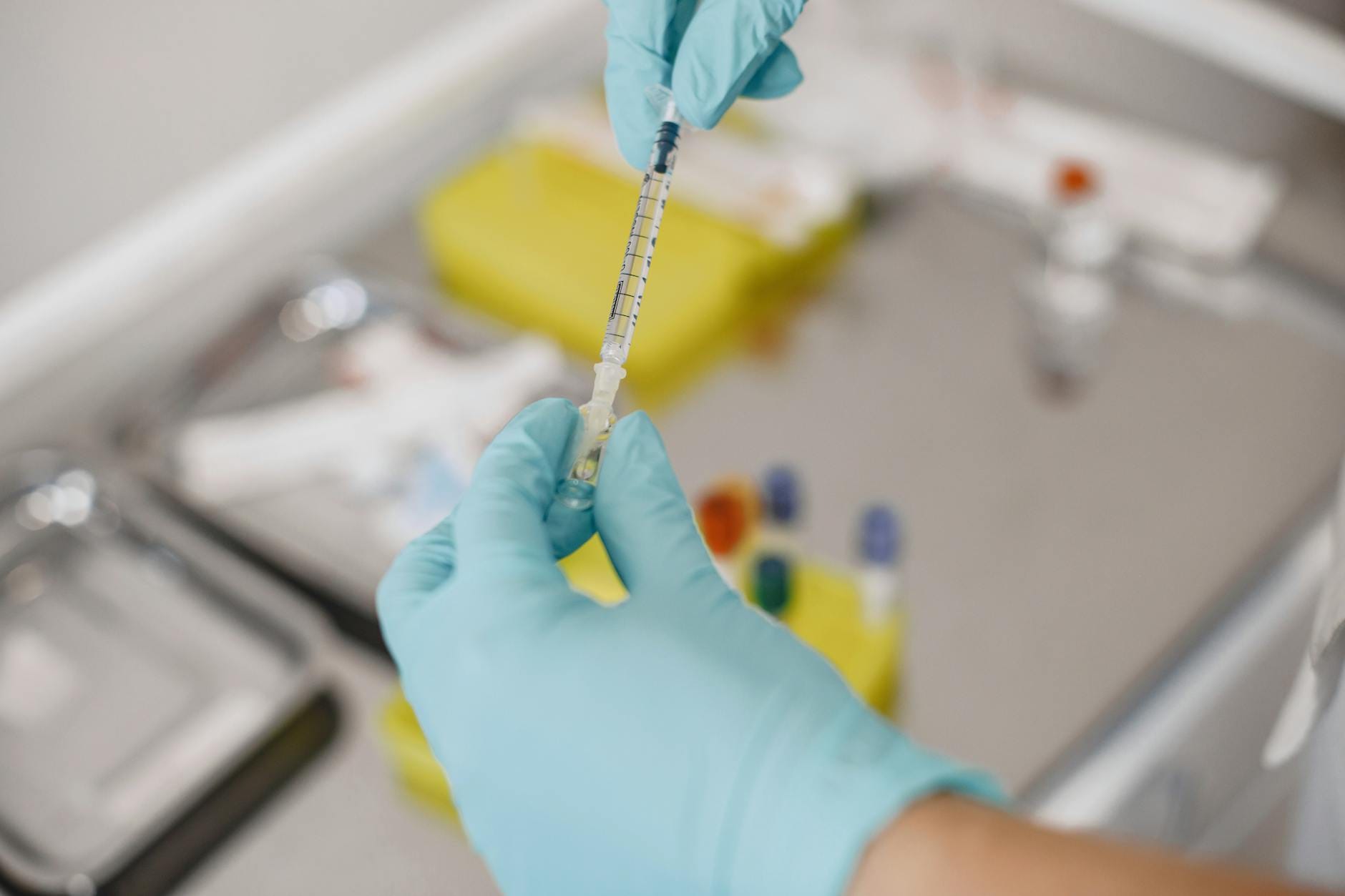
Foundational Protocol: CJC-1295 + Ipamorelin
This combination forms the cornerstone of executive peptide therapy longevity protocols. CJC-1295 with DAC (Drug Affinity Complex) is dosed at 2 mg subcutaneously once weekly, typically on Monday mornings to coincide with the weekly biological reset. Ipamorelin is dosed at 200–300 mcg subcutaneously, administered three to five nights per week, 30 to 60 minutes before sleep — timed to amplify the natural nocturnal GH pulse.
Injections are administered into subcutaneous fat at the abdomen, outer thigh, or flank using a 29–31 gauge insulin syringe. Rotation of injection sites prevents lipohypertrophy. The protocol should run in 12-week cycles followed by a 4-week washout to preserve pituitary sensitivity and avoid downregulation of GHRH receptors.
Expected outcomes by week 8 include: improved slow-wave sleep duration (typically 15–25% increase by actigraphy), reduced visceral fat by DEXA scan, increased lean mass, faster post-travel recovery, and improved morning cognitive clarity. IGF-1 should be monitored at baseline, week 6, and week 12 — target range for longevity optimization is 150–250 ng/mL.
Repair Stack: BPC-157 and TB-500
BPC-157 is administered at 250–500 mcg subcutaneously or intramuscularly, once daily for 4 to 6 weeks. For localized musculoskeletal injury, subcutaneous injection proximal to the affected area is preferred. For systemic anti-inflammatory and gut-healing applications, abdominal subcutaneous injection or oral BPC-157 (1,000–1,500 mcg) is appropriate — though subcutaneous administration offers superior bioavailability.
TB-500 is dosed at 2–2.5 mg subcutaneously twice weekly during the loading phase (weeks 1–4), then reduced to a maintenance dose of 2 mg biweekly. The loading-maintenance structure mirrors pharmacokinetic data on thymosin beta-4 accumulation in connective tissue. This peptide pair is particularly effective for executives returning from injury, managing chronic joint inflammation, or seeking accelerated recovery from intensive travel schedules.
Longevity Tier: Epitalon and MOTS-c
Epitalon is dosed at 5–10 mg per day for 10 to 20 days, administered subcutaneously or intranasally, run once or twice annually. This episodic protocol reflects the compound’s mechanism — telomerase activation does not require chronic dosing, and annual courses are consistent with the research literature from Khavinson’s group. MOTS-c, a mitochondrial-derived peptide, is dosed at 5–10 mg subcutaneously two to three times weekly and is best cycled in 8-week blocks to assess metabolic and cognitive response.
Sample Weekly Protocol Overview
| Peptide | Dose | Frequency | Timing | Primary Benefit |
|---|---|---|---|---|
| CJC-1295 (DAC) | 2 mg | 1x weekly | Monday morning | GH axis restoration, body composition |
| Ipamorelin | 200–300 mcg | 3–5x weekly | 30–60 min pre-sleep | Sleep quality, GH pulse, recovery |
| BPC-157 | 250–500 mcg | Daily (4–6 weeks) | Any time, fasted preferred | Tissue repair, gut health, inflammation |
| TB-500 | 2–2.5 mg (loading) | 2x weekly → biweekly | Any time | Connective tissue, angiogenesis |
| Epitalon | 5–10 mg | Daily for 10–20 days | Twice yearly course | Telomere maintenance, epigenetic aging |
| MOTS-c | 5–10 mg | 2–3x weekly | Pre-exercise preferred | Mitochondrial function, metabolic health |
Stacking Principles
Not all peptides should be stacked simultaneously. The GH secretagogue stack (CJC-1295 + Ipamorelin) is compatible with BPC-157 and TB-500 — these operate on entirely different receptor systems and show no pharmacokinetic conflict. Epitalon is best run as a standalone course during a washout period from the GH stack to avoid confounding biomarker interpretation. MOTS-c can be layered with any protocol given its mitochondrial-specific mechanism.
Critically, peptide protocols should be integrated with a complete metabolic foundation: optimized testosterone (if deficient), thyroid function within optimal range, comprehensive nutrition with adequate protein (1.6–2.2g/kg/day), resistance training, and sleep hygiene. Peptides amplify a functional system — they do not rescue a broken one.
Who Is the Best Candidate for Peptide Therapy Longevity Protocols?
The ideal candidate is a high-functioning executive who has already optimized lifestyle fundamentals and is experiencing the biological plateau that no amount of sleep hygiene or nutritional discipline can fully reverse. This is not a protocol for individuals in their early 30s with normal biomarkers — it is precision medicine for measurable biological decline.
Primary Candidate Profile
Executives aged 42 to 68 presenting with two or more of the following: fasting IGF-1 below 130 ng/mL, poor slow-wave sleep duration on actigraphy, DEXA-confirmed increase in visceral adipose tissue, biological age 3 or more years ahead of chronological age on DNA methylation testing, and chronic musculoskeletal issues limiting exercise capacity. Elevated high-sensitivity CRP (above 1.0 mg/L) in the absence of acute infection is also a strong indicator for the BPC-157/TB-500 repair stack.
Secondary Candidate Profile
Executives navigating peak career phases — major transactions, board responsibilities, global travel schedules — who need to maintain peak cognitive and physical output during periods when recovery time is severely compressed. In this context, peptide protocols serve a performance-preservation function, preventing the accelerated biological aging that accompanies sustained high-cortisol, low-recovery operating environments. Combining peptide therapy with the curated programs available at luxury longevity clinics for executives creates the most comprehensive intervention matrix.
Contraindicated Profiles
Executives with a personal or first-degree family history of hormone-sensitive cancers (particularly prostate, breast, or colorectal) require careful risk stratification before initiating GH secretagogue protocols, given IGF-1’s role in cellular proliferation pathways. Active autoimmune disease and pregnancy are absolute contraindications. Any executive with uncontrolled diabetes should normalize metabolic function prior to peptide therapy initiation, as GH elevation can temporarily impair insulin sensitivity.
Cost, Access, and Sourcing for Executive Peptide Protocols
Quality, legality, and sourcing rigor are non-negotiable at this level. The peptide market contains a significant volume of underdosed, contaminated, or misrepresented compounds — a clinical and legal risk that no executive should accept. The path to compliant, pharmaceutical-grade peptide access runs through licensed medical providers.
Compounding Pharmacies vs. Research Suppliers
In the United States, peptides like BPC-157, TB-500, and the CJC-1295/Ipamorelin combination are available through FDA-registered 503A compounding pharmacies with a valid physician prescription. This is the only sourcing route I endorse for human use. Compounded peptides from accredited pharmacies — such as those holding PCAB (Pharmacy Compounding Accreditation Board) certification — undergo third-party purity testing and are manufactured under USP-compliant sterile conditions.
In the UK, Canada, and Australia, regulatory frameworks vary. UK executives should access peptides exclusively through CQC-registered clinics with GMC-registered prescribers. In Australia, TGA scheduling means most therapeutic peptides require a physician’s Special Access Scheme application. Canadian physicians can prescribe compounded peptides through Health Canada-compliant compounding pharmacies. Cross-border purchasing of peptides for personal use occupies a legal grey area in all four markets — the risk to health and professional reputation does not justify the cost saving.
Cost Framework
A well-structured executive peptide protocol costs between $800 and $2,500 USD monthly, depending on the complexity of the stack and the market. CJC-1295/Ipamorelin combinations from compounding pharmacies typically run $300–$600 per month. BPC-157 and TB-500 add $200–$400. Epitalon, sourced through specialized longevity clinics, ranges from $150–$350 for a full course. Physician oversight, biomarker monitoring (IGF-1, CBC, metabolic panel, inflammatory markers), and quarterly consultation typically add $400–$800 per quarter — an investment that protects both clinical outcomes and medico-legal compliance.
Risks, Contraindications, and Safety Considerations
I will be direct: peptide therapy is not without risk, and any clinician who presents it as consequence-free is prioritizing sales over medicine. The risk profile is favorable relative to many pharmaceutical interventions, but it is not zero — and it is highly dependent on protocol design, sourcing quality, and underlying health status.
Known Adverse Effects
Water retention and transient joint discomfort are the most commonly reported effects of GH secretagogue protocols, occurring in approximately 10–15% of users during the first four weeks. These are dose-dependent and typically resolve with dose reduction. Mild injection site reactions — erythema, induration — are expected with subcutaneous administration and managed through site rotation and proper aseptic technique. Increased appetite, attributed to Ipamorelin’s partial ghrelin agonism, occurs in a minority of users and is typically beneficial in the executive context given common patterns of undereating under stress.
IGF-1 Monitoring: The Non-Negotiable
Supraphysiologic IGF-1 elevation is the primary clinical risk in GH secretagogue protocols. IGF-1 above 350 ng/mL has been associated in epidemiological literature with increased relative risk of certain epithelial cancers. This is why baseline and on-protocol IGF-1 measurement is mandatory — not optional. Target IGF-1 in the 150–250 ng/mL range represents the longevity-optimized window, consistent with data from centenarian cohort studies and the longevity research programs at institutions including Johns Hopkins and the Buck Institute.
BPC-157 and Oncological Caution
BPC-157’s pro-angiogenic effects — the same mechanism that accelerates tissue healing — raise theoretical concern in the presence of existing malignancy. While no human trial has demonstrated tumor promotion with BPC-157, it is contraindicated in any executive with active or recent cancer diagnosis. Pre-protocol cancer screening, including PSA in men over 45 and appropriate imaging based on risk profile, is a clinical standard I apply without exception.
Frequently Asked Questions
Is peptide therapy legal for executives in the US, UK, Canada, and Australia?
Yes, with important nuances. In the United States, peptides like CJC-1295, Ipamorelin, BPC-157, and TB-500 are legally prescribed by licensed physicians and dispensed through FDA-registered compounding pharmacies. They are not FDA-approved drugs for specific indications, but compounding for individual patient use is legally protected under the Federal Food, Drug, and Cosmetic Act. In the UK, peptides can be prescribed under a physician’s clinical judgment as unlicensed medicines. In Canada and Australia, regulatory requirements necessitate physician involvement through specific access pathways. Executives should never self-administer peptides sourced outside of licensed medical channels — the legal, health, and professional risks are not commensurate with any perceived benefit.
How quickly will I see results from peptide therapy?
Timeline varies by peptide and endpoint. With CJC-1295/Ipamorelin, executives typically report improved sleep quality and morning energy within 2 to 3 weeks. Body composition changes — reduced visceral fat, increased lean mass — become measurable by DEXA at week 8 to 12. BPC-157 effects on musculoskeletal injury can be apparent within 2 to 4 weeks for acute presentations. Epitalon’s benefits, operating at the epigenetic level, are best assessed via biological age re-testing at 6 and 12 months post-course. Patience and consistent biomarker monitoring are required — this is precision medicine, not acute symptom management.
Can peptide therapy be combined with testosterone replacement therapy?
Yes, and in many executive cases, the combination is clinically superior to either intervention alone. Testosterone and GH operate on overlapping but distinct anabolic pathways — TRT optimizes androgen signaling, while GH secretagogues restore the GH/IGF-1 axis. Combined protocols require more sophisticated biomarker monitoring, including full hormone panels (total and free testosterone, estradiol, SHBG, IGF-1, DHEA-S), a complete metabolic panel, and hematocrit monitoring for polycythemia risk with TRT. An experienced longevity physician should design and supervise combined protocols rather than layering prescriptions from separate providers who lack visibility into the full intervention matrix.
What biomarkers should I track on a peptide protocol?
At minimum: IGF-1 (baseline and every 6 weeks on protocol), fasting insulin, HbA1c, high-sensitivity CRP, full blood count, comprehensive metabolic panel, and a lipid panel. For advanced longevity monitoring, I recommend adding a DNA methylation biological age test (TruAge or Glycanage) at baseline and every 6 months, urinary 8-OHdG for oxidative DNA damage, and telomere length assessment annually. Executives investing in peptide therapy longevity protocols should view biomarker tracking not as a cost but as the quality control mechanism that separates precision medicine from expensive guesswork. Quarterly physician review of all data points is the standard I apply in my practice.
Are injectable peptides necessary, or do oral and nasal formulations work?
For most peptides, subcutaneous injection provides significantly superior bioavailability compared to oral administration due to peptide degradation by gastrointestinal proteases. BPC-157 is the notable exception — its gastric-derived origin confers meaningful stability in the GI tract, and oral administration at higher doses (1,000–1,500 mcg) is supported by animal data for gut-specific indications. Intranasal delivery of Epitalon and certain neuropeptides bypasses first-pass metabolism via the olfactory pathway and is used clinically. Sublingual formulations have limited evidence. For executives seeking to avoid self-injection, a clinical administration model — where injections are administered at a physician’s office or by a trained home health provider — is a viable and increasingly available option at premium longevity clinics.
How does peptide therapy compare to NAD+ infusions and other longevity interventions?
These interventions operate on distinct but complementary biological pathways and should not be viewed as competing alternatives. NAD+ infusions target the metabolic and DNA repair functions dependent on NAD+ availability — a separate but parallel longevity lever to the GH axis, tissue repair, and telomere maintenance targets of peptide protocols. My most sophisticated executive patients receive both, sequenced strategically: NAD+ infusions quarterly for mitochondrial and sirtuin support, CJC-1295/Ipamorelin ongoing for GH axis optimization, and annual Epitalon courses for epigenetic aging. The full rationale for this integrative approach is detailed in my guide on NAD+ infusion therapy for executives. The key principle: no single intervention addresses all hallmarks of aging, and protocols that target multiple pathways simultaneously produce compounding returns on biological investment.
Conclusion: Your Longevity Capital Demands a Precise Strategy
You manage risk with precision in every domain of your professional life. Your biological capital — the substrate upon which every strategic decision, relationship, and performance output depends — deserves the same rigor. Peptide therapy longevity protocols are among the most evidence-informed, mechanistically targeted interventions available to executives seeking to close the gap between chronological and biological age in 2026.
The protocols outlined here are not theoretical — they represent the clinical standard I apply with executives across multiple markets who demand measurable results, medical-grade safety, and protocols that integrate seamlessly with their lives. The science is there. The sourcing infrastructure exists. The question is whether your approach to longevity medicine matches the ambition you bring to every other aspect of your career.
If you are ready to build a personalized peptide and longevity protocol grounded in your specific biomarkers and health history, I invite you to explore the curated resources available through MenteYPlacer.com — including our comprehensive directory of luxury longevity clinics for executives across the US, UK, Canada, and Australia. Biological optimization at this level is not a luxury — it is the highest-leverage investment your balance sheet will ever accommodate.
This article is for educational purposes only and does not constitute medical advice. Consult a licensed physician before initiating any peptide therapy protocol. Individual results vary based on baseline health status, protocol adherence, and physician supervision.
— Catalina Vega, Longevity & Performance Medicine | MenteYPlacer.com
Scientific References & Sources
