“`html
Neuro Architecture for Executives: How Your Office Is Shaping Your Brain
Neuro architecture executives has become an essential discipline for today’s highest-performing executives. The built environment around you is not neutral. For executives seeking peak cognitive performance, neuro architecture offers a science-backed framework to engineer your workspace — and your brain — for sustained high-output leadership.
Every boardroom, corner office, and home workspace is either working for your prefrontal cortex — or quietly working against it. Neuro architecture executives increasingly rely on is a discipline born from the intersection of neuroscience, psychology, and architectural design. It asks a precise question: how does the physical environment alter brain function, stress hormones, decision-making capacity, and creative output? The answers are reshaping how the world’s highest-performing leaders design the spaces where they think, decide, and lead.
This is not interior decoration. It is precision medicine applied to your built environment — and the evidence is overwhelming.
What Is Neuro Architecture? A Clinical Definition: Complete Neuro architecture executives Guide
Neuro architecture is the scientific study of how architectural design elements — light, ceiling height, spatial volume, acoustic properties, material textures, natural elements, and color — affect neurological and psychological function. The field was formally established in 2003 when the Academy of Neuroscience for Architecture (ANFA) was founded in partnership with The Salk Institute, one of the world’s premier neuroscience research institutions.
The core principle is elegantly simple: the brain does not experience space passively. It processes every dimension of the built environment through dedicated neural circuits, triggering measurable hormonal, emotional, and cognitive responses. Your amygdala, hippocampus, prefrontal cortex, and default mode network are all responsive to spatial inputs — in real time, every second you occupy a room.
Research published through Harvard Medical School’s neuroscience programs has demonstrated that environmental stressors — including poor lighting, acoustic chaos, lack of natural elements, and spatial confinement — chronically elevate cortisol and suppress activity in the prefrontal cortex, the brain region most responsible for strategic thinking, impulse control, and executive function. For leaders making high-stakes decisions daily, this is not a trivial concern. Harvard Health has consistently highlighted the bidirectional relationship between chronic stress and cognitive decline.
The Neuroscience of Space: What Happens Inside the Executive Brain
When you walk into a well-designed space, your brain registers an immediate shift. Ceiling height alone influences abstract thinking — a phenomenon researchers call the “cathedral effect.” Studies from the University of Minnesota demonstrated that high ceilings promote free, associative cognition, while lower ceilings drive detail-oriented, convergent thinking. Neither is superior; the insight is that different cognitive tasks demand different spatial environments.
Natural light exposure activates the suprachiasmatic nucleus, the brain’s master circadian clock, synchronizing cortisol rhythms, alerting the norepinephrine system, and sustaining serotonin production throughout the day. Stanford Medicine researchers have documented the direct link between circadian rhythm disruption and impaired prefrontal cortex function — translating into reduced creativity, weaker working memory, and compromised emotional regulation. Stanford Medicine remains one of the leading institutions quantifying how environmental light quality directly shapes cognitive bandwidth.
Green spaces and biophilic elements — living plants, water features, wood textures, natural stone — reduce amygdala activation and lower salivary cortisol measurably within minutes of exposure. This is not aesthetic preference. It is an evolutionarily hardwired stress-recovery mechanism your brain has spent 300,000 years developing.
Why Executives Are Uniquely Vulnerable to Poor Spatial Design
The average C-suite executive makes between 35,000 and 70,000 decisions per day, operates under chronic high-stakes pressure, and has cognitive demands that far exceed those of any other professional demographic. Yet most executive workspaces are designed by facilities managers optimizing for cost per square foot — not neuroscientists optimizing for prefrontal cortex performance.
Decision fatigue is a neurobiological reality. As the prefrontal cortex depletes its glucose and dopaminergic resources throughout the day, decision quality degrades — executives become more risk-averse, more impulsive, or more avoidant. A spatially optimized workspace actively counteracts this depletion cycle by managing sensory load, supporting autonomic nervous system regulation, and embedding restorative micro-environments into the daily workflow.
Acoustic stress deserves particular attention. Open-plan offices — still prevalent in many corporate environments — create chronic low-grade noise stress that elevates cortisol by up to 34% according to research published in the Journal of Applied Psychology. For executives, this ambient noise tax is a direct performance liability. The solutions are architectural: acoustic panels, sound-masking systems, designated deep-work zones, and spatial buffers between collaborative and solitary work areas.
The Five Neuro Architecture Pillars Every Executive Office Must Address
1. Circadian-Aligned Lighting Systems
Dynamic lighting systems — also called human-centric or circadian lighting — automatically shift color temperature and intensity to match the body’s natural hormonal rhythms. Cool, high-intensity blue-spectrum light in the morning supports cortisol awakening response and dopaminergic alertness. Warmer, lower-intensity light in the afternoon protects melatonin precursors and supports the default mode network’s creative processing. This is not ambient mood lighting — it is chronobiological infrastructure.
The Mayo Clinic has documented the clinical consequences of light exposure misalignment, including suppressed melatonin, disrupted sleep architecture, and elevated inflammatory markers — all of which directly compromise next-day cognitive performance. Mayo Clinic’s research on circadian health provides executives with a compelling evidence base for investing in premium lighting systems as a direct cognitive performance tool.
For executives working across multiple time zones, dynamic lighting systems calibrated to intended time zones — not local time — can be used as a jet lag mitigation protocol, preserving cognitive continuity across international travel cycles.
2. Biophilic Design Integration
Biophilic design — the intentional integration of natural elements into the built environment — is among the most robustly evidenced interventions in neuro architecture. A landmark study from the University of Exeter found that employees in spaces with significant biophilic elements reported 15% higher well-being scores, 6% higher productivity, and 15% higher creativity ratings compared to lean, non-natural environments. These are not subjective impressions — they correlate with measurable reductions in cortisol and improvements in heart rate variability.
For executive workspaces, biophilic integration includes: living plant walls (proven to reduce particulate matter and CO2, directly improving cognitive clarity), natural material surfaces — wood, stone, woven textiles — that activate the brain’s reward circuits through tactile and visual processing, views of natural landscapes (even simulated through high-resolution dynamic displays), and water features that leverage pink noise properties to reduce cortisol and improve focused attention.
The ROI calculation for biophilic office investment is compelling. When cognitive performance is the primary revenue-generating asset of an executive, any environmental factor that measurably enhances that asset becomes a strategic business investment, not an aesthetic expenditure.
3. Acoustic Architecture and Cognitive Protection
The human auditory system cannot be voluntarily switched off. Unlike vision — which can be directed and closed — hearing is a continuous, involuntary monitoring system. In environments with unpredictable acoustic interruption, the brain maintains a persistent low-level vigilance state, consuming working memory resources and keeping the amygdala mildly activated throughout the workday. Over months and years, this acoustic stress load contributes to chronic cortisol elevation and accelerated cognitive aging.
Executive-grade acoustic design includes sound transmission class (STC) ratings of 55 or above for private office walls, strategic placement of soft materials — carpets, acoustic panels, upholstered surfaces — to reduce reverberation time below 0.4 seconds, and the use of broadband sound masking systems (typically pink or brown noise delivered at 48-52 dB) in transitional spaces. These specifications are not luxury — they are neurological hygiene infrastructure for high-stakes cognitive work.
4. Spatial Variability and Cognitive Zoning
One of the most actionable insights from neuro architecture for executives is the principle of cognitive zoning — designing distinct spatial environments optimized for different modes of brain function. Strategic thinking and visionary work benefit from high-ceiling, expansive spaces with natural views. Analytical detail work benefits from enclosed, acoustically controlled spaces with focused task lighting. Recovery and creative incubation benefit from biophilic lounge environments with low sensory demand.
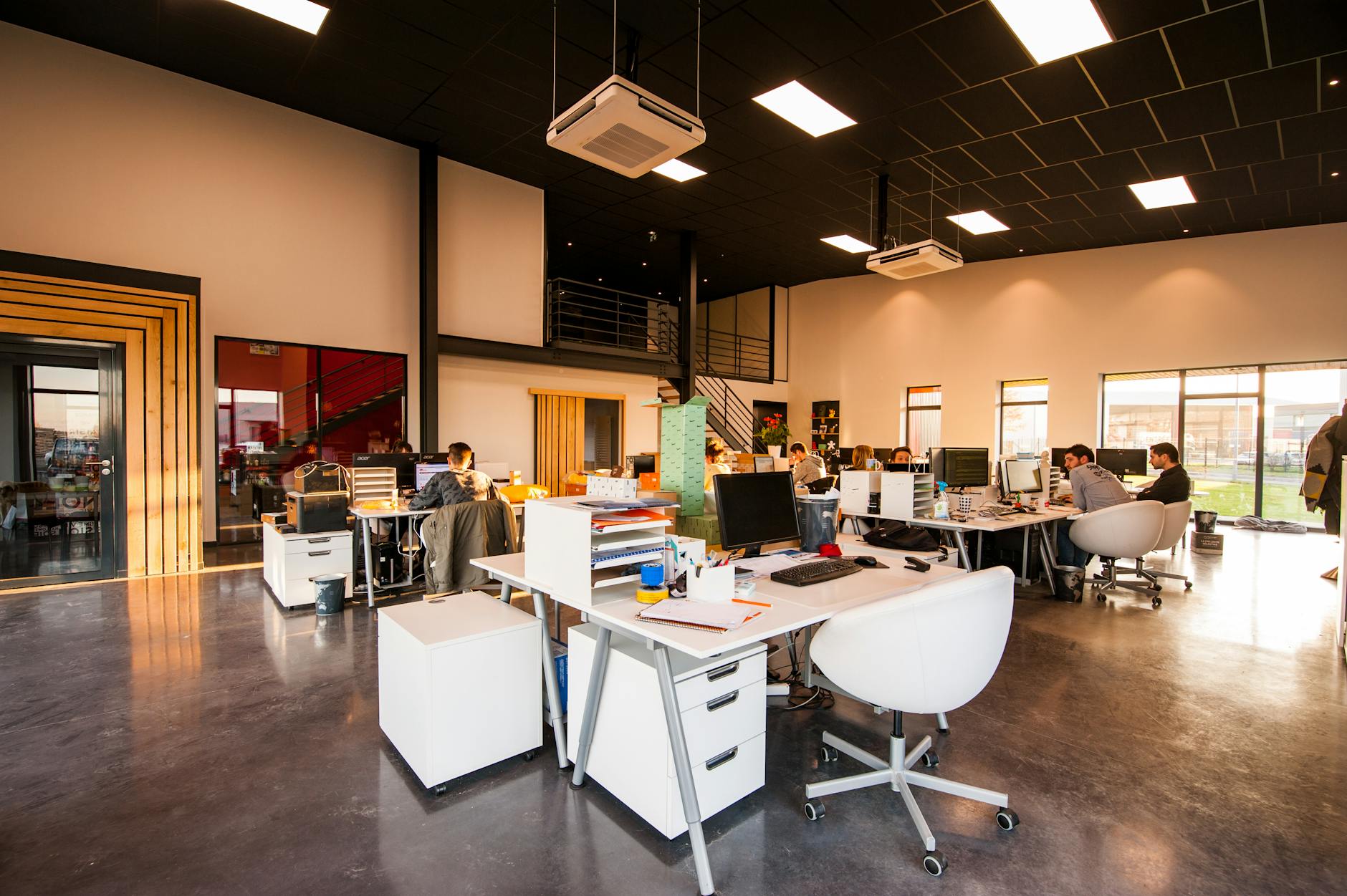
This is directly applicable to executive workspace programming. Rather than one static office serving all cognitive functions, the optimized executive environment includes designated zones — a strategic thinking alcove with panoramic views, a deep-work pod with acoustic isolation, and a biophilic recovery space with restorative sensory properties. Even within a single office footprint, furniture arrangement, lighting zones, and material choices can architecturally encode these cognitive distinctions.
This cognitive zoning principle pairs powerfully with executive-level neurofeedback brain optimization protocols, which help executives train the neural states that each spatial zone is designed to support — creating a closed-loop environment-and-brain training system.
5. Thermal Comfort and Air Quality Optimization
Thermal comfort and indoor air quality are the least glamorous and most commonly neglected dimensions of neuro architecture — yet they carry some of the highest cognitive performance impact. Research from Harvard T.H. Chan School of Public Health found that cognitive function scores in employees working in high-performance “green” buildings with optimized ventilation were 101% higher than those in conventional buildings. The primary driver was CO2 concentration: indoor CO2 levels above 1,000 ppm significantly impair decision-making, information processing, and strategic thinking.
The optimal cognitive thermal range is 70-77°F (21-25°C) — narrower than most HVAC systems are set to maintain. Individual variation exists, but maintaining workspace temperature within this range reduces thermoregulatory load on the hypothalamus, freeing metabolic resources for cortical function. HEPA air filtration, regular ventilation rate measurement, and VOC monitoring from furniture and building materials complete the air quality picture for a truly neurologically optimized executive environment.
Neuro Architecture in Practice: The Executive Home Office and Travel Environment
Post-pandemic executive work patterns have made the home office a primary cognitive performance venue — often with significantly more design latitude than corporate headquarters. This is an extraordinary opportunity. The executive home office can be designed from scratch with full neuro architectural intent: circadian lighting, biophilic integration, acoustic isolation, thermal control, and cognitive zoning — all within a single, personally controlled environment.
Travel environments represent the greatest neuro architectural challenge for executives. Hotel rooms are designed for generic occupancy, not high-performance cognitive work. Developing a personal travel protocol — portable circadian lighting glasses, noise-canceling headphones, portable air quality monitors, and deliberate selection of travel accommodation based on natural light access and acoustic quality — is a sophisticated executive wellness practice increasingly adopted by longevity-focused leaders.
This spatial awareness extends into meeting room selection, conference choice, and even restaurant environments where negotiations occur. The negotiator who understands that a noisy, high-stimulus environment depletes working memory and increases risk tolerance holds a genuine cognitive advantage over one who does not. For executives who also practice executive meditation and mindfulness, spatial awareness becomes an extension of the attentional training already embedded in their daily practice.
The Neuro Architecture and Longevity Connection
Beyond immediate performance, the long-term neuroprotective implications of spatial environment are significant. Chronic cortisol exposure — driven substantially by poor environmental design — accelerates hippocampal atrophy, a key early marker of cognitive aging and Alzheimer’s risk. Conversely, environments that consistently activate the parasympathetic nervous system, support restorative sleep architecture, and reduce allostatic load contribute meaningfully to cognitive longevity.
The executive who invests in their workspace as a neuroprotective environment is making a longevity decision as much as a performance decision. For those who combine spatial optimization with comprehensive cognitive performance stacks — including evidence-based nootropic protocols for executives — the compounding effects on cognitive reserve and long-term brain health become clinically meaningful over a 10-20 year horizon.
The emerging field of environmental geroscience is beginning to quantify what neuro architecture practitioners have long observed clinically: the built environment is a modifiable determinant of brain aging, with effect sizes comparable to diet, exercise, and sleep. For executives who have already optimized those pillars, spatial design represents the next frontier of accessible cognitive longevity intervention.
How to Begin: A Clinical Framework for Executive Workspace Audit
The most effective starting point is a systematic neuro architectural audit of your primary work environments. This involves evaluating six domains: lighting quality and circadian alignment, acoustic profile and noise stressor identification, biophilic content and nature connection, spatial layout and cognitive zoning adequacy, thermal and air quality parameters, and finally, psychological safety and control — the degree to which the space supports autonomy and reduces uncertainty-driven amygdala activation.
Each domain can be assessed with a combination of direct measurement tools (lux meters, CO2 monitors, sound level meters) and validated questionnaire instruments measuring perceived cognitive load, stress, and restorative quality. The audit generates a prioritized intervention list, allowing executives to sequence workspace improvements according to expected cognitive ROI — highest-impact changes first.
In clinical practice, executives who complete a structured neuro architectural workspace optimization over 90 days consistently report measurable improvements in sustained attention, creative output quality, end-of-day cognitive reserve, and subjective stress levels — changes that persist and compound over time as the brain adapts to a consistently lower-stress, higher-quality sensory environment.
Frequently Asked Questions: Neuro Architecture for Executives
What is the most impactful single change an executive can make to their office from a neuro architecture perspective?
If forced to identify one intervention with the highest evidence base and broadest cognitive impact, it would be circadian-aligned natural or dynamic artificial lighting. Light is the primary synchronizer of the brain’s master clock — it directly governs cortisol rhythms, dopamine signaling, serotonin production, and melatonin timing, all of which determine cognitive bandwidth throughout the day. An executive who works in poorly lit, spectrally static environments is operating with a fundamentally disrupted neurochemical foundation regardless of how well optimized every other aspect of their health protocol is.
The practical implementation is straightforward: maximize exposure to natural daylight in the morning (ideally 10,000 lux for 20-30 minutes within the first hour of waking), install a dynamic LED system in the primary workspace that shifts from 6500K cool white in the morning to 2700K warm white in the late afternoon, and eliminate blue-spectrum light exposure after 7 PM using blue-light blocking glasses or warm-only lighting in evening spaces. This single intervention consistently produces documented improvements in sleep architecture, next-day working memory, and executive function scores within two to three weeks of consistent implementation.
How does neuro architecture differ from standard interior design or ergonomics?
Interior design optimizes primarily for aesthetics and brand expression. Ergonomics focuses on physical body mechanics — reducing musculoskeletal injury risk through furniture and equipment positioning. Neuro architecture operates at a different level entirely: it is concerned with how the totality of the spatial environment — light, acoustics, spatial geometry, material quality, biophilic content, thermal conditions, and sensory complexity — alters neurological function, hormonal status, and psychological states. A beautifully designed office and an ergonomically correct office can both be neurologically hostile environments if they fail to address circadian lighting, acoustic stress, air quality, and restorative spatial variety.
The most sophisticated executive wellness programs now integrate all three disciplines — ensuring spaces are aesthetically aligned with brand identity and personal values, ergonomically sound for physical health, and neurologically optimized for peak cognitive performance. These dimensions are complementary, not competing, and the integration of all three produces environments that genuinely elevate both daily performance and long-term health outcomes.
Can neuro architecture principles be applied to virtual and hybrid meeting environments?
Absolutely — and this is an area of rapidly growing clinical relevance. The virtual environment that appears on camera behind an executive during video calls, as well as the physical space they occupy while on those calls, both have measurable neurological effects — on the executive themselves and on their interlocutors. Background environments that contain biophilic elements, warm natural light, and moderate spatial depth are subconsciously processed by viewers as higher-trust, higher-competence signals — leveraging the same evolutionary neural circuits that respond to safe, resource-rich natural environments in in-person interactions.
For the executive themselves, the physical workspace during video calls matters enormously. Sitting in front of a bright window creates glare stress and visual fatigue within 20-30 minutes. Poor acoustic isolation means the auditory cortex is continually processing competing sound streams, consuming cognitive resources. And the phenomenon of “Zoom fatigue” — now well-documented in the cognitive psychology literature — is substantially driven by the continuous self-monitoring required when one’s own face is visible on screen, which activates a persistent self-referential processing loop in the default mode network that is cognitively exhausting. Neuro architectural solutions include dedicated video call stations with directional lighting, acoustic treatment, and strategically designed backgrounds — a meaningful productivity investment for executives operating in hybrid environments.
How much does a neuro architecturally optimized executive office cost to implement?
The cost range is extremely wide and depends heavily on the scope of changes required and the existing infrastructure of the space. At the entry level, meaningful neurological improvements can be achieved for $2,000-$8,000 — primarily through circadian lighting upgrades, acoustic panel installation, portable air quality monitoring and filtration, and biophilic additions such as high-quality living plants and natural material accessories. This level of investment consistently delivers measurable cognitive performance improvements with a return on investment that is difficult to match through any other productivity-enhancing expenditure.
Comprehensive neuro architectural redesigns of executive suites — involving architectural modifications, premium acoustic systems, full circadian lighting infrastructure, integrated biophilic installations, and custom cognitive zoning — typically range from $50,000 to $500,000+ depending on square footage and specification level. For executives whose cognitive output directly generates seven-to-nine-figure business value annually, even the premium investment tier represents a fraction of a percent of value protected. The most useful framing is to calculate your effective hourly cognitive value and ask: what is the cost of operating at 80% versus 100% of cognitive capacity for 250 working days per year?
Is there scientific evidence that neuro architecture actually improves executive function and decision-making?
Yes — the evidence base is substantial and growing rapidly. A landmark study from the Harvard T.H. Chan School of Public Health published in Environmental Health Perspectives measured cognitive function scores across nine domains in workers across multiple building environments and found that optimized building conditions — better ventilation, lower CO2, reduced VOC exposure — produced cognitive function scores averaging 61% higher than conventional building conditions, rising to 101% higher in the best-performing spaces. These were not self-reported improvements — they were measured using validated cognitive performance instruments including the Strategic Management Simulation tool used by the US Air Force to assess decision-making under pressure.
Additional evidence comes from the extensive literature on restorative environments and attention restoration theory (Kaplan & Kaplan), the psychophysiology of nature exposure and stress recovery (Ulrich’s stress recovery theory), and the growing body of neuroimaging research showing that spatial environments produce distinct and measurable patterns of amygdala activation, prefrontal cortex activity, and default mode network engagement. The field is young but the signal is clear and consistent: the built environment is a direct modulator of executive cognitive function, and designing it with neurological intent produces meaningful, measurable performance improvements.
How does neuro architecture interact with other executive cognitive performance interventions like neurofeedback, nootropics, or meditation?
The relationship is synergistic and clinically important. Think of the workspace as the environmental substrate within which all other cognitive performance interventions either succeed or are undermined. An executive who practices daily meditation but returns to an acoustically stressful, poorly lit, biophilic-deficient workspace immediately after practice is cycling between neurological recovery and neurological stress — a pattern that limits the compounding benefits of the meditation practice. An executive who takes precision nootropic compounds to support sustained dopaminergic focus but spends eight hours in an environment with CO2 levels above 1,200 ppm is partially negating those biochemical benefits through environmental toxin load.
In my clinical experience, the greatest cognitive performance gains come from executives who approach the optimization as a complete system: neuro architectural workspace design provides the environmental foundation, regular mindfulness and meditation practice develops the neural circuitry for attentional control and stress resilience, neurofeedback training accelerates the development of specific high-performance brain states, and evidence-based nootropic and nutritional protocols provide the biochemical substrate for sustained cognitive output. Each intervention amplifies the others — and the workspace is the container that holds the entire system together throughout the working day.
Your Workspace Is Either Building Your Brain or Depleting It.
Book a private executive wellness consultation with Catalina Vega, and receive a comprehensive neuro architectural workspace audit alongside your full cognitive performance protocol — personalized to your neurobiology, your schedule, and your performance goals.
Each consultation includes a detailed evaluation of your current workspace across all six neuro architectural domains, a prioritized intervention roadmap with evidence-based specifications, integration with your existing cognitive performance stack — including neurofeedback, mindfulness, and nutritional protocols — and a 90-day optimization timeline with defined performance benchmarks.
This is executive medicine at the intersection of neuroscience and design. Your cognitive performance is your most valuable asset. The environment it operates in deserves the same precision investment as everything else at this level.
Schedule Your Executive Consultation →
Private, confidential, physician-led. Limited availability for new executive clients.
“`
Scientific References & Sources
