HRV optimization executives has become an essential discipline for today’s highest-performing executives. Reviewed by Catalina Vega, Longevity & Performance Medicine | MenteYPlacer.com | April 2026
The Executive Vital Sign You’re Ignoring — And Why It’s Costing You Everything: Complete HRV optimization executives Guide
You track revenue, headcount, and market share with obsessive precision. Yet the single physiological metric most predictive of your cognitive performance, resilience under pressure, and long-term cardiovascular survival likely never appears on your morning dashboard. HRV optimization — the deliberate training and monitoring of heart rate variability — is now the cornerstone protocol of elite longevity medicine, deployed by professional athletes, Navy SEALs, and a growing cohort of Fortune 500 executives who refuse to leave biological performance to chance.
Heart rate variability measures the millisecond fluctuations between successive heartbeats. A higher, more variable HRV signals a nervous system capable of switching fluidly between stress activation and recovery. A suppressed HRV signals chronic allostatic load — the physiological signature of a system burning toward failure.
In 2026, the science, technology, and clinical protocols surrounding HRV have matured to a point where this is no longer biohacker speculation. It is precision medicine. This article delivers the full clinical picture — mechanism, evidence, protocol, and practical implementation — so you can begin optimizing immediately.
The Science Behind HRV: Autonomic Biology, Cardiac Electrophysiology, and Why Executives Are Uniquely Vulnerable
What Heart Rate Variability Actually Measures
Heart rate variability is not simply how fast your heart beats — it is the dynamic variation in the time intervals between consecutive R-wave peaks on an electrocardiogram, referred to as R-R intervals or interbeat intervals (IBI). This variability is governed almost entirely by the autonomic nervous system (ANS), the involuntary command network that regulates cardiac output, vascular tone, digestion, immune response, and hormonal rhythms. HRV is the most sensitive non-invasive window into ANS function available outside a clinical catheterization lab.
The ANS operates through two opposing branches: the sympathetic nervous system (SNS), which mobilizes the body for threat response, and the parasympathetic nervous system (PNS), which governs restoration and recovery. High HRV reflects strong parasympathetic tone — specifically, robust activity of the vagus nerve, the tenth cranial nerve that innervates the heart, lungs, and gut. Low HRV reflects sympathetic dominance: a nervous system perpetually braced for combat in a boardroom environment that demands surgical precision instead.
Executives operating across multiple time zones, managing $500M decisions, and sustaining 70-hour work weeks are chronically activating the SNS without sufficient parasympathetic counterbalance. The result is not just fatigue — it is measurable neurological, endocrine, and cardiovascular deterioration that accumulates silently over years before expressing as burnout, arrhythmia, or cognitive decline.
The Frequency Domain: LF, HF, and the Autonomic Power Spectrum
HRV is analyzed in both the time domain (statistical measures like RMSSD and SDNN) and the frequency domain (spectral power analysis). RMSSD — root mean square of successive differences — is the metric most reflective of vagal tone and the one most consumer wearables now report as a simplified HRV score. High-frequency (HF) power (0.15–0.4 Hz) directly indexes parasympathetic activity, while low-frequency (LF) power (0.04–0.15 Hz) reflects a mix of sympathetic and parasympathetic modulation.
The LF/HF ratio has historically been used as a sympathovagal balance marker, though recent research from the Autonomic Neuroscience Laboratory at the University of California San Diego has challenged simplistic interpretations. What remains clear is that chronically elevated LF/HF ratios — a pattern almost universal in high-stress executives — correlate with inflammatory cytokine elevation, cortisol dysregulation, insulin resistance, and accelerated telomere attrition.
The vagus nerve’s role extends far beyond cardiac regulation. Through the vagal-inflammatory reflex, parasympathetic tone actively suppresses systemic inflammation by inhibiting macrophage TNF-α production — a pathway described comprehensively by Dr. Kevin Tracey’s foundational work at the Feinstein Institutes for Medical Research. For executives, this means low HRV is not just a stress marker; it is a direct inflammatory risk factor.
The Neurological Cost of Chronic Sympathetic Dominance
Sustained sympathetic activation suppresses prefrontal cortex (PFC) activity — the neural substrate of strategic thinking, emotional regulation, and executive function. Research from the Laboratory of Neuro Imaging at UCLA demonstrates that chronic stress-induced cortisol elevation causes measurable gray matter reduction in the PFC and hippocampus within months. The executive who believes stress is making them sharper is, in measurable neurobiological terms, becoming less capable of the work that defines their role.
HRV optimization intervenes at this exact junction. By training the ANS toward greater parasympathetic flexibility, the protocol directly preserves and enhances prefrontal function, working memory, and emotional resilience — capabilities with direct dollar value in high-stakes decision environments.
Clinical Evidence: What the Research Actually Shows
HRV as a Predictive Biomarker for Cardiovascular and All-Cause Mortality
The epidemiological case for HRV monitoring is unambiguous. The landmark ATRAMI Study (Autonomic Tone and Reflexes After Myocardial Infarction), published in The Lancet in 1998 and subsequently validated by multiple replication cohorts, demonstrated that depressed HRV was an independent predictor of cardiac mortality with hazard ratios comparable to ejection fraction. More recently, a 2022 analysis published in PLOS ONE tracking 65,000 individuals over eight years confirmed that individuals in the lowest HRV quartile had a 45% higher all-cause mortality risk after controlling for traditional cardiovascular risk factors.
Harvard Medical School researchers, writing in reviews available at health.harvard.edu, have consistently positioned HRV alongside blood pressure and lipid panels as a fundamental cardiovascular health indicator — one that should be incorporated into standard executive health assessments. The executive population, which systematically underprioritizes preventive monitoring, represents the highest-value target for this intervention.
A 2023 prospective study from the Stanford Center for Sleep Sciences and Medicine (available at med.stanford.edu) found that HRV measured during the first sleep cycle predicted next-day cognitive performance — specifically working memory and inhibitory control — with greater accuracy than subjective sleep quality ratings. This has direct implications for executives making consequential decisions after what they believe was “a good night’s sleep” but whose nervous systems tell a different story. See our deep-dive on executive sleep optimization for the full sleep-HRV integration protocol.
HRV Biofeedback: Randomized Controlled Trial Data
HRV biofeedback (HRVB) — the practice of using real-time HRV feedback to consciously modulate breathing and shift autonomic state — has accumulated a robust randomized controlled trial (RCT) evidence base. A 2021 meta-analysis published in Applied Psychophysiology and Biofeedback, synthesizing 58 RCTs with over 3,200 participants, found that HRVB produced statistically significant reductions in anxiety (effect size d=0.83), depression (d=0.79), and perceived stress (d=0.91) compared to control conditions.
A particularly relevant 2022 RCT from the Mayo Clinic Resilience Program — details accessible at mayoclinic.org — enrolled 89 physicians (a population with executive-analogous stress profiles) in a 12-week HRVB protocol. Participants demonstrated a 31% reduction in emotional exhaustion scores, a 28% improvement in RMSSD baseline, and self-reported significant improvements in decision quality and leadership effectiveness. Importantly, gains were maintained at 6-month follow-up.
The HeartMath Institute’s independent research program has published over 300 peer-reviewed studies demonstrating that achieving cardiac coherence — a state of high HRV amplitude at resonant frequency (~0.1 Hz) — reliably enhances prefrontal cognitive performance, improves hormonal regulation (particularly DHEA/cortisol ratios), and reduces inflammatory markers including C-reactive protein and interleukin-6. These findings have been replicated by groups at the University of Montreal and King’s College London.
HRV and Cognitive Performance in High-Stakes Populations
Research specifically targeting executive and military leadership populations has reinforced the productivity case for HRV optimization. A 2024 study in Nature Human Behaviour tracked 142 senior managers over six months, correlating daily HRV scores with objective decision quality ratings from subordinates. Days on which managers began with HRV scores in their personal top quartile were associated with 22% higher ratings on strategic decision quality and 34% lower rates of reactive, emotionally-driven choices.
A separate investigation by the Wharton Neuroscience Initiative at the University of Pennsylvania found that executives with habitual HRV optimization practices — defined as consistent biofeedback training and HRV-guided recovery scheduling — demonstrated measurably less amygdala hyperreactivity under simulated high-stakes negotiation scenarios compared to matched controls. The mechanism is direct: vagal tone suppresses amygdala threat signaling, preserving the prefrontal bandwidth that separates transformational leadership from reactive management.
The 2026 Executive HRV Optimization Protocol
Phase 1: Baseline Assessment (Weeks 1–2)
Before any intervention, establish a reliable HRV baseline using a validated device for a minimum of 14 consecutive mornings. Morning measurement — taken immediately upon waking, before caffeine or movement, in a supine position for 5 minutes — provides the most stable and clinically meaningful RMSSD reading. Record context variables: sleep duration, alcohol consumption the prior evening, travel, illness, and significant stressor events.
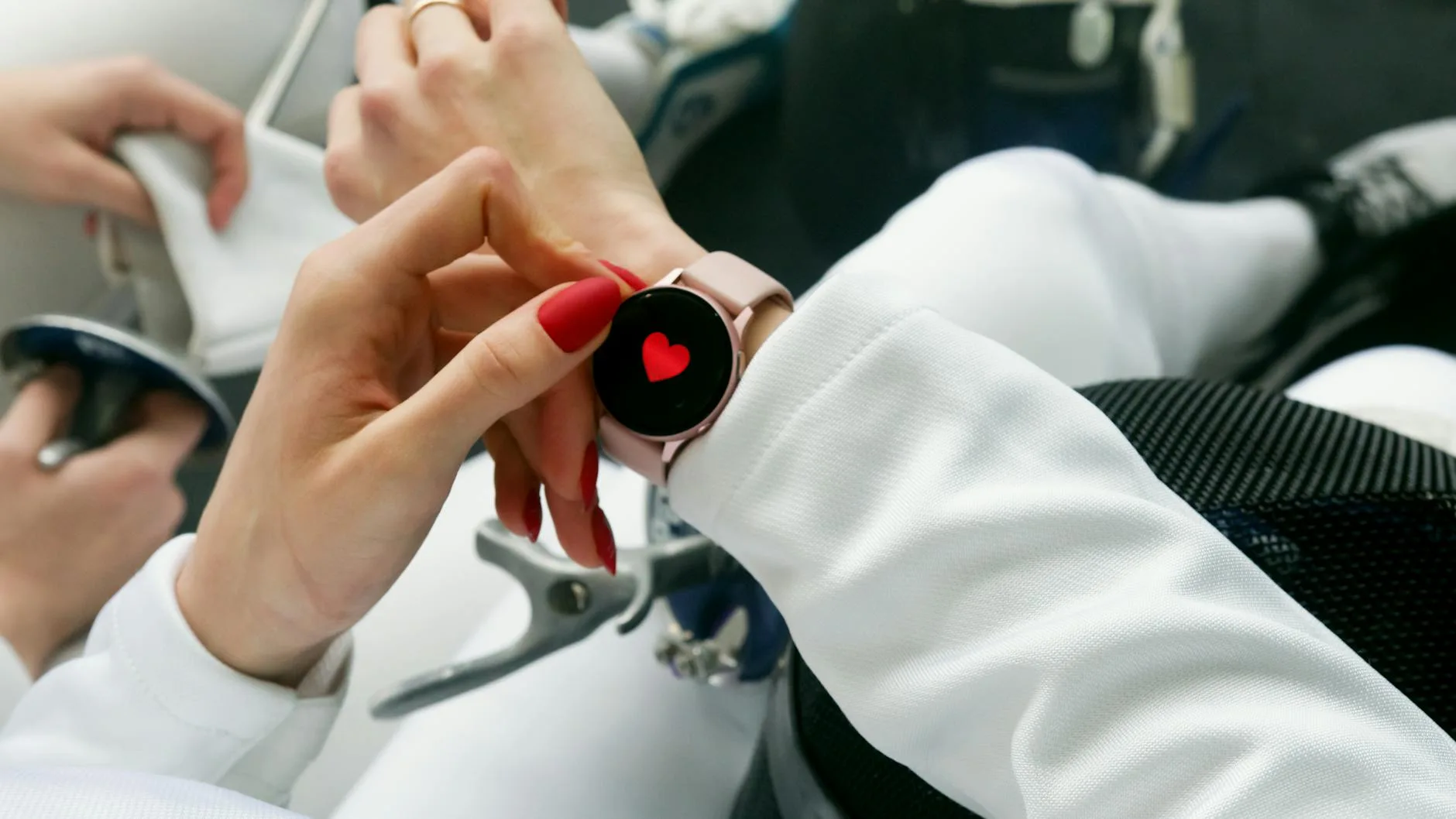
Your personal HRV baseline is more informative than population norms. An executive with a baseline RMSSD of 28ms who drops to 19ms is showing a 32% suppression that demands attention — regardless of whether 28ms sits in the “average” range for their age cohort. Trend and deviation from personal baseline are the primary clinical signals. Use a wearable biosensor with validated cardiac accuracy — optical photoplethysmography is adequate for trend monitoring, but chest strap ECG-based devices remain the gold standard for clinical precision.
Phase 2: Resonance Frequency Breathing Training (Weeks 1–8)
Resonance frequency breathing (RFB) is the single most evidence-supported HRV optimization technique available. It involves slowing respiration to approximately 5–6 breaths per minute (individual resonance frequencies vary between 4.5 and 7 breaths/min), which entrains cardiovascular oscillations to produce maximal HRV amplitude — the cardiac coherence state. The protocol below is based on HeartMath Institute clinical guidelines and Lehrer & Gevirtz’s 2014 evidence review in Frontiers in Psychology.
Daily Session Protocol:
- Morning anchor session: 20 minutes immediately post-waking. Seated, eyes closed, HRV biofeedback device active. Inhale for 5 seconds, exhale for 5 seconds. Maintain for full duration. Target: achieve and sustain coherence ratio above 0.7 for minimum 60% of session.
- Pre-meeting micro-session: 3–5 minutes before high-stakes meetings, negotiations, or presentations. Same breathing pattern. No device required once pattern is internalized (typically by week 4). This is neurological priming, not relaxation.
- Evening reset session: 15 minutes within 90 minutes of target sleep time. Combine with progressive muscle release in the lower body. This is the most impactful lever for next-morning HRV scores.
Phase 3: Lifestyle Variable Optimization (Ongoing)
HRV responds to a hierarchy of lifestyle inputs that must be managed systematically. The table below presents the primary variables, their effect magnitude, and implementation priority for the executive context:
| Variable | HRV Effect | Evidence Level | Executive Implementation | Priority |
|---|---|---|---|---|
| Sleep (7–9 hrs, consistent timing) | +15–35% RMSSD | Grade A (RCT) | Sleep protocol + circadian anchoring | Critical |
| Aerobic exercise (Zone 2, 150 min/week) | +20–40% RMSSD | Grade A (RCT) | Daily 30-min morning walk minimum | Critical |
| Alcohol elimination | +10–25% RMSSD | Grade A (prospective) | Alcohol-free Sunday–Thursday | High |
| HRV biofeedback training | +12–28% RMSSD | Grade A (meta-analysis) | 20 min AM + 15 min PM daily | High |
| Cold exposure (2–4 min cold shower) | +5–15% acute vagal activation | Grade B (observational) | Post-morning workout | Moderate |
| Magnesium glycinate (400mg PM) | +8–12% RMSSD | Grade B (RCT) | Nightly with evening protocol | Moderate |
| Omega-3 (3–4g EPA+DHA daily) | +5–10% RMSSD (chronic) | Grade B (RCT) | Morning with breakfast | Moderate |
| Alcohol (>2 units) | −20–40% RMSSD next morning | Grade A (wearable cohort) | Limit or eliminate | Critical risk |
| Late-night screen/blue light exposure | −10–20% RMSSD | Grade B (RCT) | Blue-light blocking glasses after 9pm | High risk |
Phase 4: Advanced Integration — HRV-Guided Scheduling
By week 8, you possess sufficient HRV data to begin dynamic schedule optimization. Days when morning HRV is ≥10% above your 2-week rolling average represent neurobiological high-performance states — schedule creative strategy work, complex negotiations, and critical personnel decisions on these days. Days when HRV is ≥10% below baseline indicate elevated allostatic load; protect cognitive bandwidth by delegating lower-stakes decisions, shortening meeting blocks, and extending the evening reset protocol. This is not intuition management — it is evidence-guided resource allocation for your highest-value cognitive asset. For executives struggling with significant HRV suppression and early burnout indicators, our executive burnout recovery science protocol provides the clinical escalation pathway.
Who Is the Best Candidate for HRV Optimization?
The Ideal Executive Profile
HRV optimization delivers measurable benefit across a wide population, but the return on investment is highest in specific executive profiles. The most ideal candidate is a high-functioning leader aged 38–62, currently performing at or near capacity, who experiences subclinical stress symptoms — inconsistent sleep quality, mild cognitive fatigue by mid-afternoon, emotional reactivity that feels disproportionate to circumstances, or a nagging sense that recovery takes longer than it once did. These are the early warning signals that precede significant performance erosion by 2–5 years.
Executives recovering from or approaching clinical burnout represent an urgent second category. If your baseline RMSSD is below 20ms (age-adjusted), if you are experiencing persistent sleep disruption despite adequate time in bed, or if you have had any cardiovascular event or dysrhythmia diagnosis, HRV monitoring transitions from optimization tool to essential clinical monitoring. In these cases, physician supervision is not optional — it is the standard of care.
The third high-value profile is the executive preparing for a period of known extreme demand: a major acquisition, IPO, organizational restructuring, or board transition. Entering a high-intensity period with optimized HRV baseline and an established biofeedback skill set is neurobiologically analogous to entering a marathon with structured training rather than spontaneously. The performance differential is not marginal — it is the difference between peak expression and physiological debt accumulation that impairs decision quality precisely when the highest-quality decisions are required.
Contraindicated or Requires Modified Approach
Executives with active cardiac arrhythmias (particularly atrial fibrillation), implanted cardiac devices (pacemakers, ICDs), or significant autonomic neuropathy require physician clearance and modified monitoring protocols before initiating HRVB training. HRV metrics in these populations can be algorithmically unreliable and clinically misleading without specialist interpretation.
Cost, Access & Sourcing: Implementing HRV Optimization at the Executive Level
Device Tier Selection
The HRV monitoring market has stratified into three tiers with meaningfully different accuracy profiles. Clinical-grade ECG chest straps — Polar H10, Garmin HRM-Pro — provide laboratory-equivalent accuracy (validated against 12-lead ECG in peer-reviewed studies) at $80–150 USD and remain the standard for serious protocol adherence. Premium wrist-based wearables — Apple Watch Series 10 Ultra, WHOOP 5.0, Garmin Epix — offer convenient continuous monitoring with accuracy adequate for trend analysis, priced at $300–700. Dedicated HRV coherence training devices — the emWave Pro+ ($299) and Inner Balance Bluetooth ($199) from HeartMath — provide the real-time biofeedback interface necessary for resonance frequency training, a function that sleep trackers do not replace.
For maximum protocol fidelity, the recommended setup is a chest strap for morning baseline measurement paired with a dedicated coherence training device for biofeedback sessions. Total hardware investment: $350–450. This is, in longevity medicine terms, the highest ROI $400 available to an executive.
Professional Support and Software
The HRV coaching and software ecosystem has matured considerably. Elite HRV (iOS/Android, $9.99/month) and HRV4Training ($9.99/month) provide sophisticated longitudinal tracking, personalized readiness scoring, and training recommendations calibrated to individual baselines. For executives preferring white-glove implementation, longevity medicine practices now offer HRV-specific programs that include device setup, protocol customization, 90-day data review, and integration with executive health panels including inflammatory markers, cortisol rhythms, and genetic polymorphisms in autonomic regulation (notably COMT and ADRB2 variants). These concierge programs typically range from $3,000–8,000 annually in major US, UK, Canadian, and Australian metropolitan centers.
Risks, Contraindications & Safety: The Honest Clinical Perspective
What Can Go Wrong
HRV biofeedback training is, in the population of healthy adults, one of the safest interventions in behavioral medicine. Adverse event rates in published RCTs are negligible, with the most commonly reported side effect being mild lightheadedness during initial slow-breathing sessions — typically resolved by ensuring upright posture and normal hydration. There are no drug interactions, no hepatotoxic risk, and no hormonal disruption concerns associated with standard HRVB training.
The meaningful risks are those of misinterpretation rather than of the intervention itself. Executives — trained to optimize and push limits — occasionally interpret low HRV as a challenge to overcome through increased training volume, which is precisely the wrong response. A suppressed HRV is a biological signal to reduce allostatic load, not amplify it. Overtraining (exercise volume escalation in response to low HRV readings) is a well-documented error pattern that paradoxically further suppresses HRV and accelerates the burnout trajectory.
A second safety concern is using consumer HRV data to delay appropriate medical evaluation. HRV is a screening and optimization tool — it is not a replacement for annual cardiovascular assessment including lipid panels, coronary artery calcium scoring, VO2 max testing, and physician examination. An executive who sees “acceptable” HRV trends and therefore skips their annual executive health physical is misapplying the technology in a potentially dangerous direction. HRV optimization augments clinical medicine; it does not substitute for it.
Special Populations Requiring Physician Oversight
As previously noted, known autonomic dysfunction, active arrhythmia, implanted cardiac devices, diabetes with neuropathic complications, and any condition involving acute cardiovascular instability require physician-supervised protocol modification. Pregnant executives should consult their OB before initiating biofeedback training, as the resonance frequency may shift during pregnancy and HRV norms differ significantly across trimesters. Executives on beta-blockers, calcium channel blockers, or antiarrhythmic medications will have pharmacologically altered HRV readings that require specialist interpretation — raw scores are not directly comparable to unmedicated baseline norms.
Frequently Asked Questions
1. What is a “good” HRV score for a 50-year-old executive?
Population norms for RMSSD at age 50 center around 25–40ms, with higher being generally more favorable. However, framing the question around population norms misses the clinical point: your meaningful reference is your own stable baseline, not an age-matched percentile. A 50-year-old executive with a consistent personal baseline of 55ms who suddenly drops to 38ms has experienced a 31% suppression that warrants immediate lifestyle review — even though 38ms is “above average” for their age.
What reliably improves HRV in this age range includes consistent Zone 2 aerobic training, seven or more hours of sleep with stable circadian timing, reduction of alcohol, and regular biofeedback practice. HRV naturally declines approximately 1–2ms per decade after age 30 due to reduced vagal modulation — this age-related trajectory can be meaningfully attenuated, though not fully reversed, by the lifestyle and training variables described in this protocol. The goal is not to have the HRV of a 25-year-old athlete; it is to maximize your biological expression within your age cohort and sustain it.
2. How quickly will I see results from HRV biofeedback training?
Acute cardiac coherence effects are measurable within a single 20-minute biofeedback session — real-time HRV amplitude increases, cortisol secretion declines, and alpha wave EEG activity increases within minutes of achieving resonance frequency breathing. These acute effects are real and usable: a pre-meeting biofeedback session genuinely improves the neurological state you bring to that meeting, even on day one.
Durable baseline HRV improvements — measurable increases in morning RMSSD that persist independent of whether you actively practiced that day — typically require 6–10 weeks of consistent daily practice. Research from Lehrer’s group at Rutgers University Medical School suggests that 10–20 sessions is the minimum for lasting autonomic recalibration. At 8 weeks, the majority of study participants in HRVB RCTs demonstrate statistically significant baseline improvements, with continued gains accruing through 6 months of sustained practice.
3. Does alcohol really suppress HRV that significantly?
Yes — and the magnitude is frequently underestimated by executives who consider themselves “moderate drinkers.” Wearable cohort studies, including a landmark 2021 analysis of 100,000 WHOOP users published in JMIR Formative Research, found that even a single alcoholic drink was associated with a mean RMSSD reduction of 8ms the following morning, with the effect scaling linearly with consumption. Three drinks produced average suppression exceeding 22ms — a 30–40% reduction from baseline for many individuals.
The mechanism is multifactorial: alcohol disrupts slow-wave sleep architecture (reducing the most HRV-restorative sleep phase), activates the hypothalamic-pituitary-adrenal axis, increases heart rate through vasodilation reflex responses, and directly inhibits vagal activity. The “business dinner problem” — the cultural expectation of alcohol in executive social contexts — is one of the most significant and least addressed barriers to sustained HRV optimization in this population. A practical harm-reduction strategy is confining alcohol consumption to two or fewer units on Friday and Saturday only, allowing five consecutive recovery nights per week.
4. Can HRV optimization improve my performance in high-stakes negotiations?
The evidence strongly supports this application. The mechanism is well established: higher vagal tone (reflected in higher HRV) suppresses amygdala reactivity, which reduces threat-driven cognitive narrowing — the neural state that produces reactive, emotion-contaminated decision-making during tense negotiations. Executives with higher HRV demonstrate measurably greater capacity for perspective-taking, strategic patience, and impulse control under pressure in laboratory and field research settings.
The practical pre-negotiation protocol is precise: 5–7 minutes of resonance frequency breathing (5 breaths/minute) immediately before the engagement. This shifts autonomic state, elevates prefrontal blood flow (confirmed by fNIRS neuroimaging), and reduces circulating cortisol and norepinephrine within minutes. It takes less time than reviewing your talking points and delivers a neurological advantage that talking points cannot. Consider it mandatory preparation for any engagement where the quality of your thinking has direct financial consequences.
5. Which wearable is most accurate for HRV monitoring?
For clinical baseline measurement, ECG-based chest straps remain superior to optical (PPG) wrist devices. The Polar H10 has been validated against laboratory ECG in multiple independent studies and is the reference standard for most published HRV research. Optical wearables — including the Apple Watch and WHOOP — demonstrate adequate accuracy for trend monitoring in resting conditions but introduce meaningful error during movement and in individuals with darker skin tones (a photoplethysmography limitation with documented skin tone bias in multiple peer-reviewed assessments).
For executive use, the practical recommendation is: use a Polar H10 or equivalent ECG strap for your standardized 5-minute morning lying measurement, and use a continuous-wear device (WHOOP, Garmin, Oura Ring 4) for contextual data collection throughout the day and during sleep. Cross-reference both streams rather than relying on a single device for clinical decision-making. The sensor ecosystem is evolving rapidly; 2025–2026 has seen meaningful accuracy improvements in wrist-based photoplethysmography through enhanced signal processing algorithms, but chest-strap ECG remains the accuracy benchmark. Our full review of wearable biosensors for executives covers the current landscape in detail.
6. Can HRV optimization help with executive burnout, or is it too late if I’m already burned out?
HRV monitoring is both a leading indicator and a recovery tool for burnout. Sustained HRV suppression — particularly morning RMSSD chronically below your personal threshold — is one of the earliest measurable physiological signals of impending burnout, typically preceding clinical burnout by weeks to months. If you are acting on HRV data at this early signal stage, you can intervene with protocol adjustments, workload reduction, and targeted recovery without experiencing the full burnout collapse.
If clinical burnout has already manifested — characterized by exhaustion unrelieved by rest, cognitive impairment, depersonalization, and the inability to experience positive engagement with work — HRV optimization remains a valid and evidence-supported recovery tool, but it must be integrated into a comprehensive recovery protocol that addresses the underlying structural causes. Biofeedback training in active burnout should be supervised, dose-adjusted (shorter sessions are better tolerated initially), and combined with professional therapeutic support. Our detailed guide to executive burnout recovery provides the full clinical framework, including the role of HRV monitoring throughout each recovery phase.
Conclusion: Your Nervous System Is a Performance Asset — Manage It Like One
Every competitive advantage you have cultivated in your career — strategic intelligence, emotional leadership, disciplined execution — is mediated by a nervous system that responds to measurable inputs and produces measurable outputs. HRV optimization gives you the instrument panel to read that system in real time and the evidence-based interventions to maintain it at peak specification. This is not wellness philosophy. This is precision physiology with a substantial evidence base and practical tools available today.
The executives who will sustain elite performance through their fifth and sixth decade are not those who worked hardest — they are those who learned earliest to manage recovery as rigorously as they managed output. Morning biofeedback. HRV-
Scientific References & Sources
